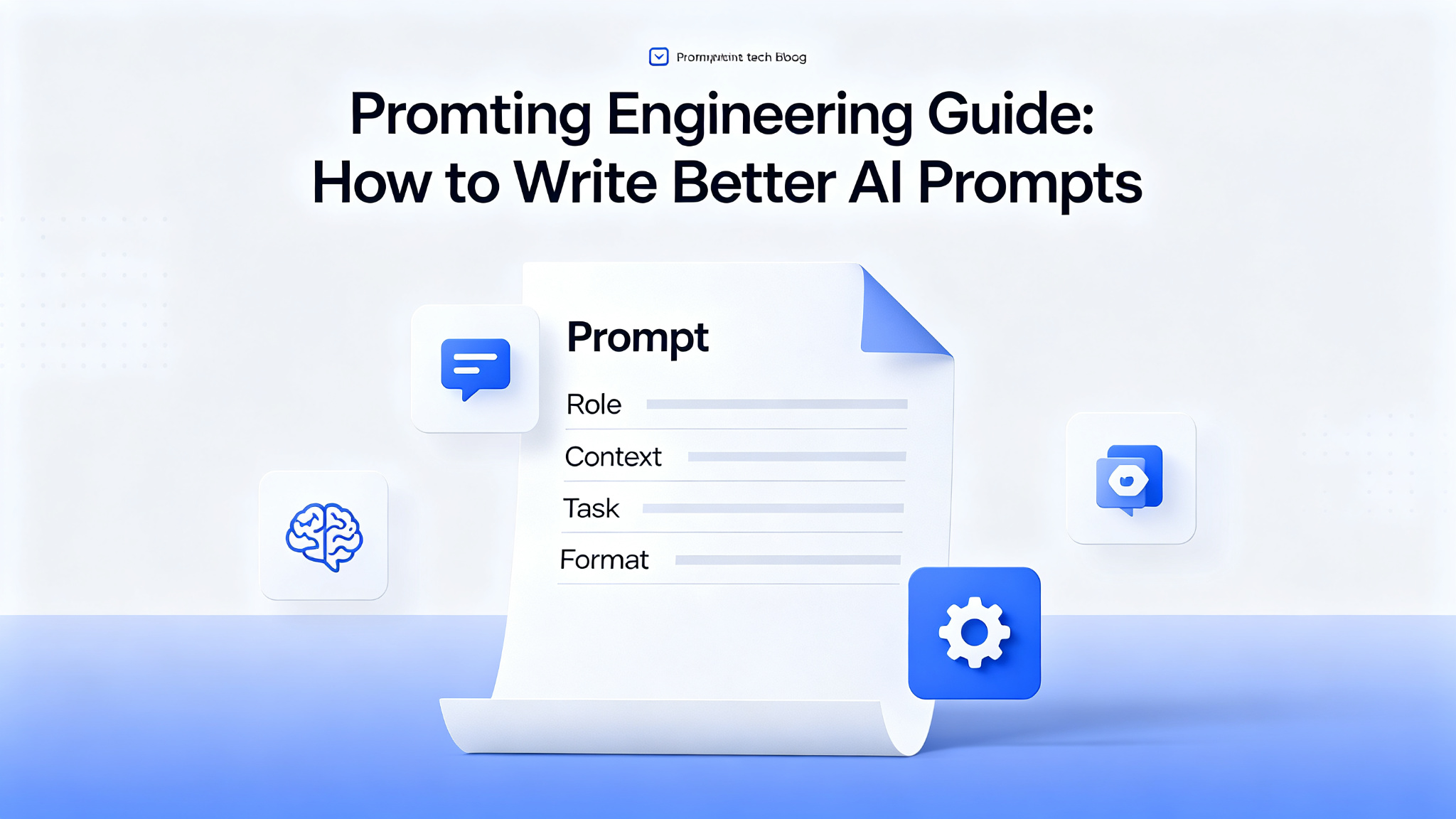
Prompt engineering is the skill of crafting effective inputs to get the best possible outputs from AI models. As AI becomes more powerful and ubiquitous, the ability to write good prompts is becoming an essential skill for professionals in every field. This comprehensive guide teaches you the proven frameworks, techniques, and formulas that will help you get better results from any AI model, whether it's for text, images, video, or code.
What Makes a Great Prompt?
- Clarity and specificity — the AI can't read your mind
- Context and background — give the AI the information it needs
- Role assignment — tell the AI who it should be
- Format specification — tell the AI exactly how to output
- Examples — show, don't just tell
- Iteration — refine and improve based on results
The RCTF Framework
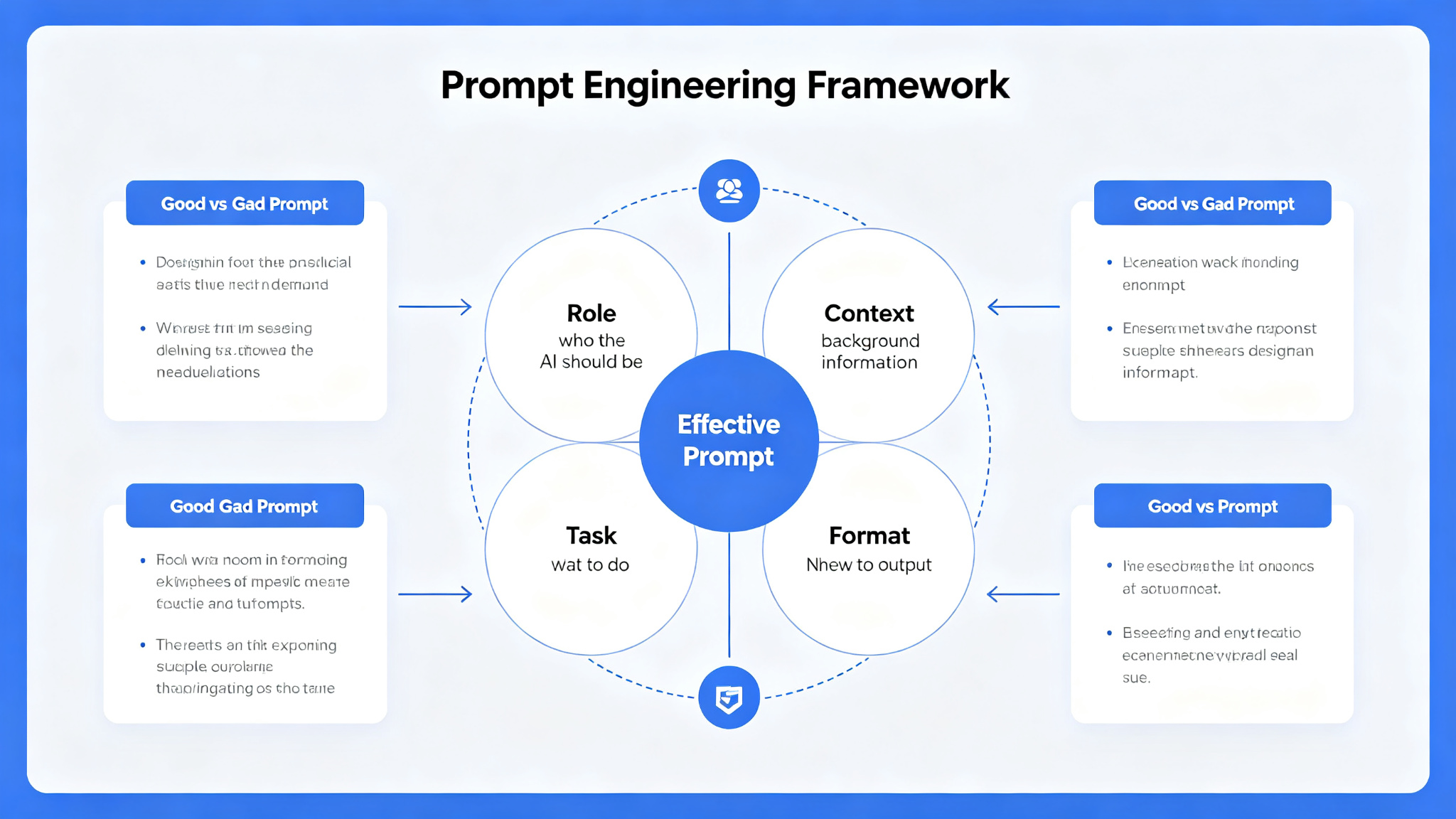
The most effective prompts follow the RCTF framework: Role, Context, Task, Format. This simple structure dramatically improves AI output quality:
- Role: 'You are an expert [profession] with 10 years of experience in [field].'
- Context: 'I am working on [project] for [audience]. The current situation is [background].'
- Task: 'Please [specific action] for [purpose]. Focus on [key areas].'
- Format: 'Output as [format]. Use [structure]. Include [elements]. Keep it [length/tone].'
Common Prompt Mistakes to Avoid
Even experienced prompt engineers make these common mistakes. Avoiding them will immediately improve your results:
Mistake #1: Being vague. 'Write something about marketing' gives poor results. 'Write a 500-word blog post about 5 email marketing tips for small businesses in 2026' gives great results.
Advanced Prompt Techniques
Once you master the basics, these advanced techniques will take your prompting to the next level:
- Chain-of-thought: 'Think step by step. First, analyze the problem. Then, consider possible solutions. Finally, recommend the best option.'
- Few-shot learning: Provide 2-3 examples of the input-output pattern you want, then give your actual input
- Self-critique: 'After generating your answer, critique it and identify 3 weaknesses. Then, provide an improved version.'
- Role-play with constraints: 'You are [role]. You must [constraints]. You cannot [restrictions]. How would you handle [situation]?'
Prompting for Different AI Types
Different types of AI require different prompting approaches. Here's how to adapt your prompts for each:
- Text AI (GPT, Claude): Be detailed, use structure, ask for reasoning
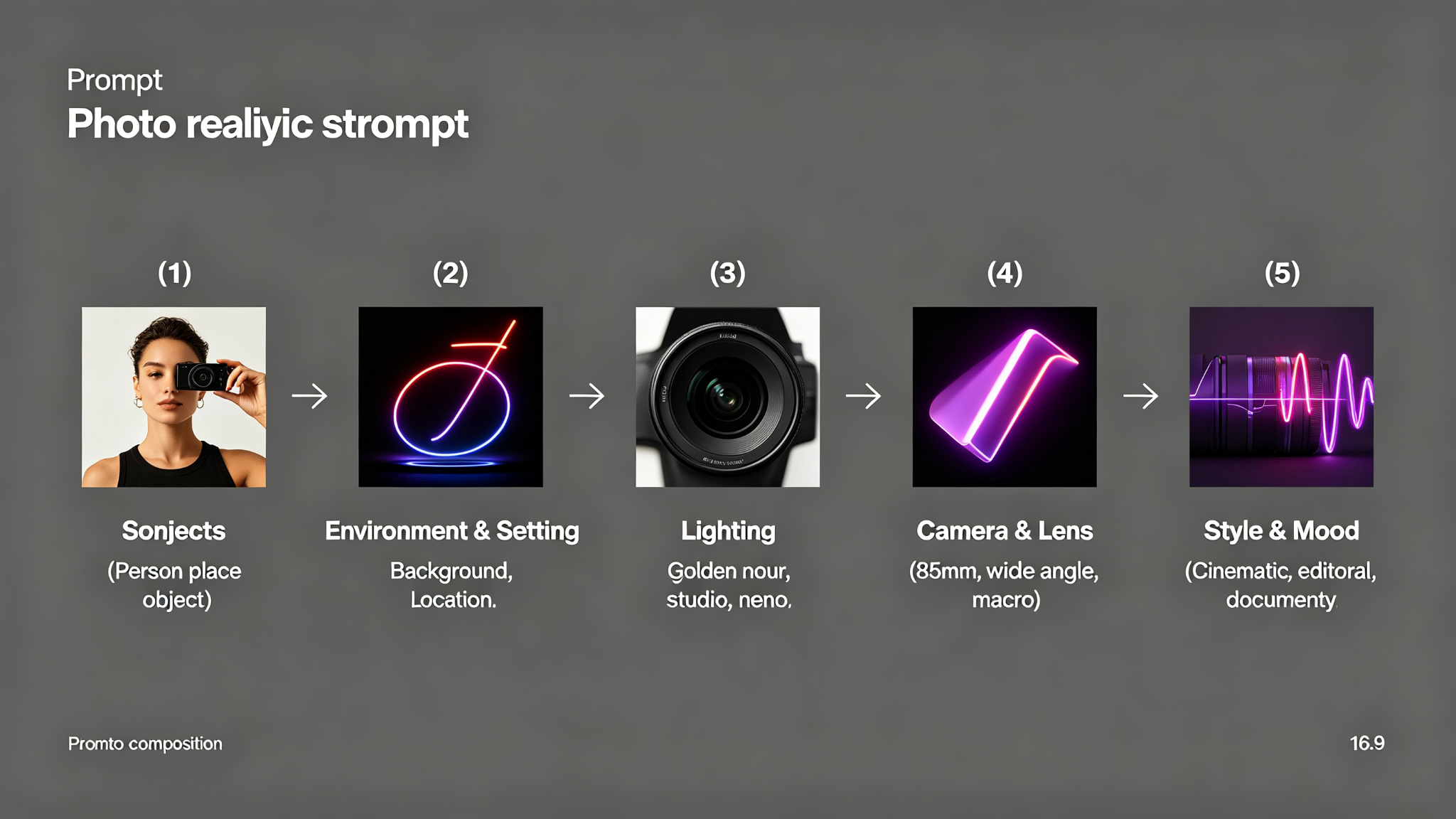
- Image AI (Midjourney, DALL-E): Describe visual elements, use style references, specify aspect ratio
- Video AI (Sora, Runway): Describe motion, camera movement, pacing, keep scenes simple
- Code AI (Copilot, Cursor): Be specific about requirements, provide context, ask for explanations
Pro Tips for Better Results
- Start with the RCTF framework for every prompt
- Be specific — the more detail you provide, the better the output
- Give the AI a role — it changes the tone and depth of responses
- Always specify the output format you want
- Use examples when the output format is complex or specific
- Iterate — the first output is rarely perfect, refine based on results
- Keep a library of your best prompts for reuse
Final Thoughts
Prompt engineering is both a science and an art that improves with practice. By following the RCTF framework, avoiding common mistakes, and using advanced techniques, you can dramatically improve the quality of AI outputs. Remember that the best prompt engineers are curious experimenters — they test, observe, refine, and learn from every interaction. As AI models continue to evolve, the fundamentals of good prompting will remain the same: clarity, context, specificity, and iteration. Master these skills, and you'll be able to harness the full power of AI for any task.