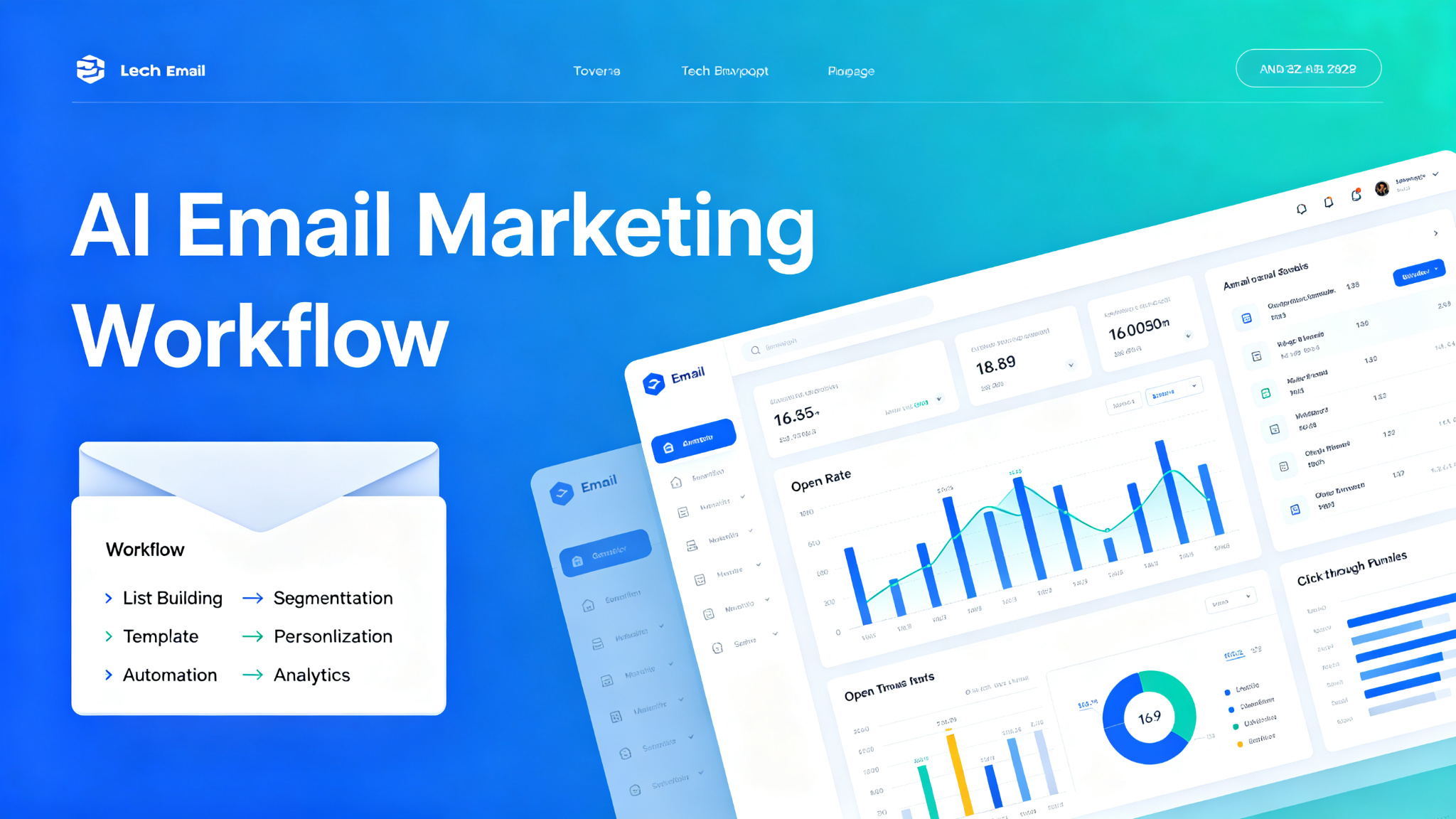
A well-defined email marketing workflow is essential for consistent, high-quality results. When you integrate AI into your workflow, you can automate repetitive tasks, generate ideas faster, and produce better output in less time. This guide walks you through a complete AI-powered email marketing workflow, from start to finish, with practical steps, recommended tools, and pro tips for success.
Why You Need an AI-Powered Email Marketing Workflow
Without a structured workflow, email marketing can feel chaotic and inefficient. You might waste time on repetitive tasks, miss important steps, or produce inconsistent quality. An AI-powered workflow solves these problems by:
- Automating repetitive and time-consuming tasks
- Providing structure and consistency to your process
- Generating ideas and first drafts in seconds
- Reducing errors and improving quality
- Freeing you to focus on creative and strategic work
- Enabling you to produce more output in less time
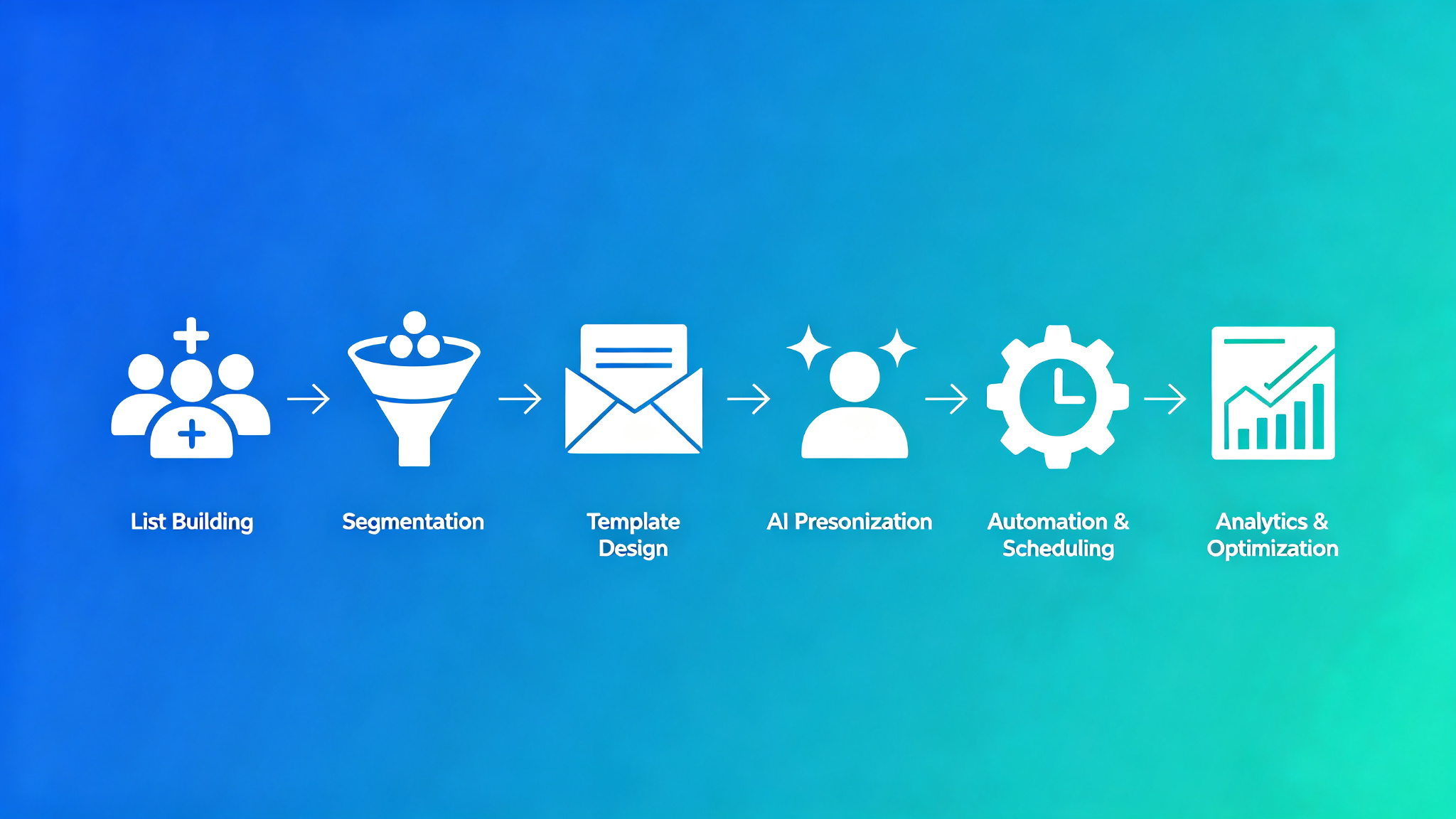
The Complete AI Email Marketing Workflow
Step 1: List Building and Growth
Every successful email marketing campaign starts with a high-quality email list. Use AI to optimize your lead magnets, improve your opt-in forms, and grow your list with engaged subscribers.
AI usage: Use AI to generate lead magnet ideas, write opt-in copy that converts, design effective lead magnets, and suggest list growth strategies based on your audience and business.
- Create valuable lead magnets (ebooks, checklists, templates)
- Design high-converting opt-in forms and landing pages
- Promote your lead magnets across your channels
- Ensure compliance with email regulations (GDPR, CAN-SPAM)
Step 2: Audience Segmentation and Personalization
Segment your audience to deliver more relevant and personalized email content. AI can help you analyze subscriber behavior, create segments, and personalize content for each segment.
AI usage: Use AI to analyze subscriber behavior and engagement, create audience segments based on behavior and preferences, generate personalized content recommendations, and suggest segmentation strategies.
- Collect subscriber data and behavior
- Create audience segments based on behavior and preferences
- Define personalization variables and rules
- Set up dynamic content for different segments
Step 3: Email Template Design and Creation
Create professional, responsive email templates that look great on all devices. AI can help you design templates, write email copy, and create visually appealing emails that drive engagement.
AI usage: Use AI to generate email template designs, write compelling email copy, suggest subject lines and preview text, and create visually appealing email layouts that drive clicks and conversions.
- Design responsive email templates
- Create a library of reusable email components
- Write compelling email copy with AI assistance
- Test templates across email clients and devices
Step 4: Campaign Creation and AI Personalization
Create and send email campaigns with AI-powered personalization. AI can help you write personalized emails, generate subject lines, optimize send times, and even predict which subscribers will engage.
AI usage: Use AI to generate personalized email content for each subscriber, write multiple subject line variations for A/B testing, optimize send times based on subscriber behavior, and predict engagement and conversions.
- Define campaign goals and target segments
- Write personalized email content with AI
- Generate subject line variations for testing
- Set up A/B tests for subject lines, content, and send times
Step 5: Automation and Drip Campaigns
Set up automated email workflows that nurture leads and drive conversions on autopilot. AI can help you design automation workflows, write drip campaign sequences, and optimize automation performance.
AI usage: Use AI to design automation workflows based on subscriber behavior, write complete drip campaign sequences, suggest trigger points and actions, and optimize automation performance based on data.
- Map out your customer journey and touchpoints
- Design automation workflows for different scenarios
- Write drip campaign sequences (welcome, nurture, re-engagement)
- Set up triggers, conditions, and actions
Step 6: Analytics, Testing, and Continuous Optimization
Analyze your email performance and continuously optimize your campaigns. AI can help you analyze metrics, identify trends, generate reports, and suggest improvements to increase open rates, clicks, and conversions.
AI usage: Use AI to analyze email performance metrics, identify trends and patterns in engagement, generate automated performance reports, and suggest actionable improvements for your email campaigns.
- Track key metrics (open rate, click rate, conversion rate)
- Analyze A/B test results and implement winners
- Identify underperforming campaigns and segments
- Generate reports and optimize your strategy
Recommended AI Tools
Here are the best AI tools for each stage of your email marketing workflow:
- **List building**: Leadpages, Unbounce, ConvertKit for lead magnets and forms
- **Email service**: Mailchimp, ConvertKit, ActiveCampaign, Klaviyo
- **Copywriting**: ChatGPT, Claude, Jasper for email copy and subject lines
- **Design**: Canva, Beehiiv, Stripo for email template design
- **Automation**: ActiveCampaign, HubSpot, Klaviyo for automation workflows
- **Analytics**: Native ESP analytics, Google Analytics, Mixpanel
Pro Tips for Success
- Focus on list quality over quantity — engaged subscribers are more valuable
- Write compelling subject lines — they determine whether your email gets opened
- Personalize your emails — use the subscriber's name and relevant content
- A/B test everything — subject lines, send times, content, CTAs
- Keep your list clean — remove inactive subscribers regularly
- Ensure mobile-friendly design — most emails are opened on mobile
- Provide value in every email — don't just sell, educate and entertain
Final Thoughts
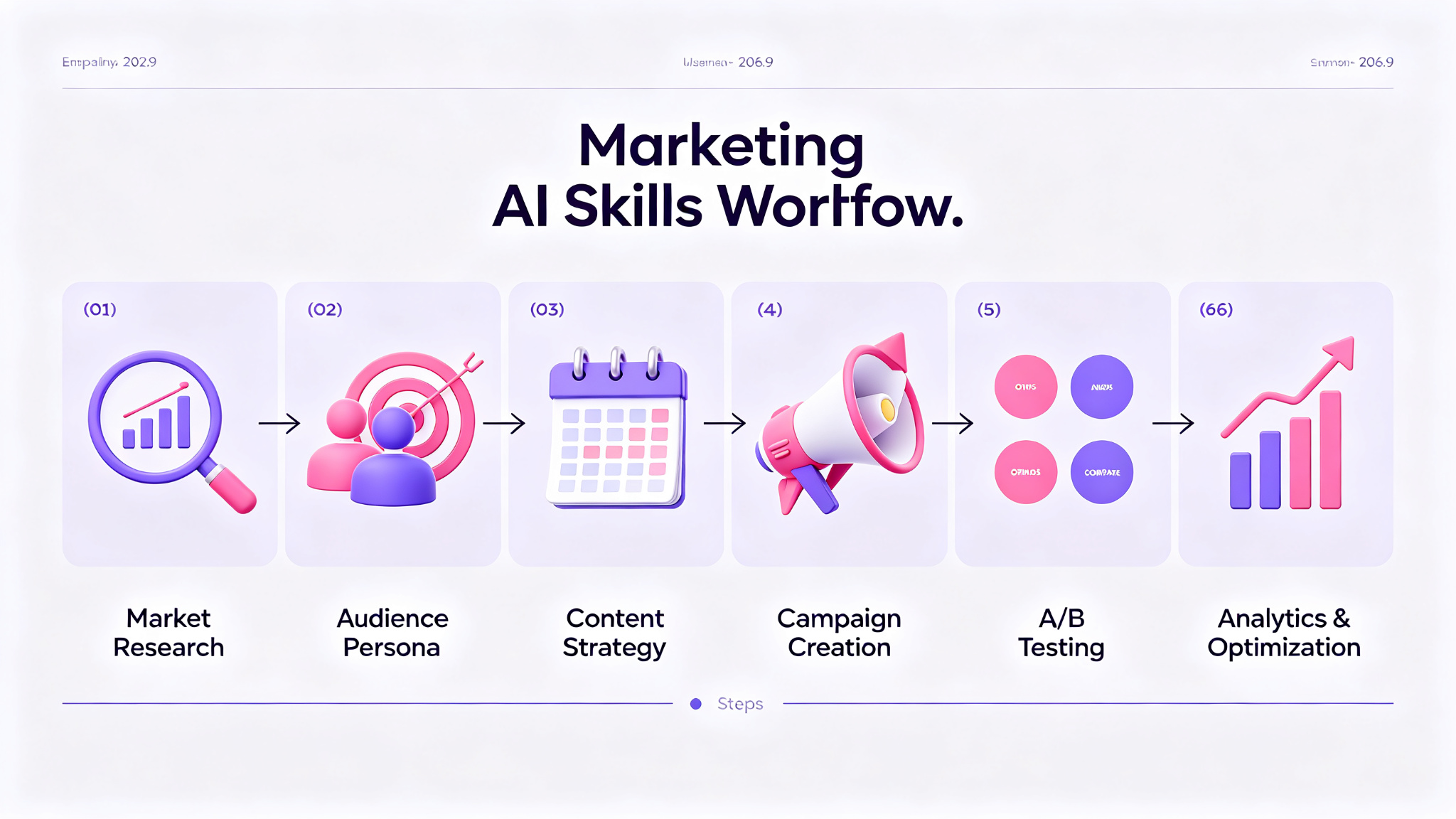
An AI-powered email marketing workflow can transform how you communicate with your audience, enabling you to build stronger relationships, drive more conversions, and achieve better ROI from your email marketing efforts. By following this six-step workflow — list building, segmentation, template design, campaign creation, automation, and analytics — you can create a comprehensive email marketing strategy that delivers consistent results. AI tools can help you at every stage, from writing compelling email copy to personalizing content and optimizing performance, saving you time and helping you create more effective campaigns. Remember that email marketing is about building relationships, not just sending messages. The best email marketers use AI to handle repetitive tasks while focusing their energy on creating valuable content and genuine connections with their subscribers. Start implementing this AI-powered email marketing workflow today and see the impact on your engagement and conversions.