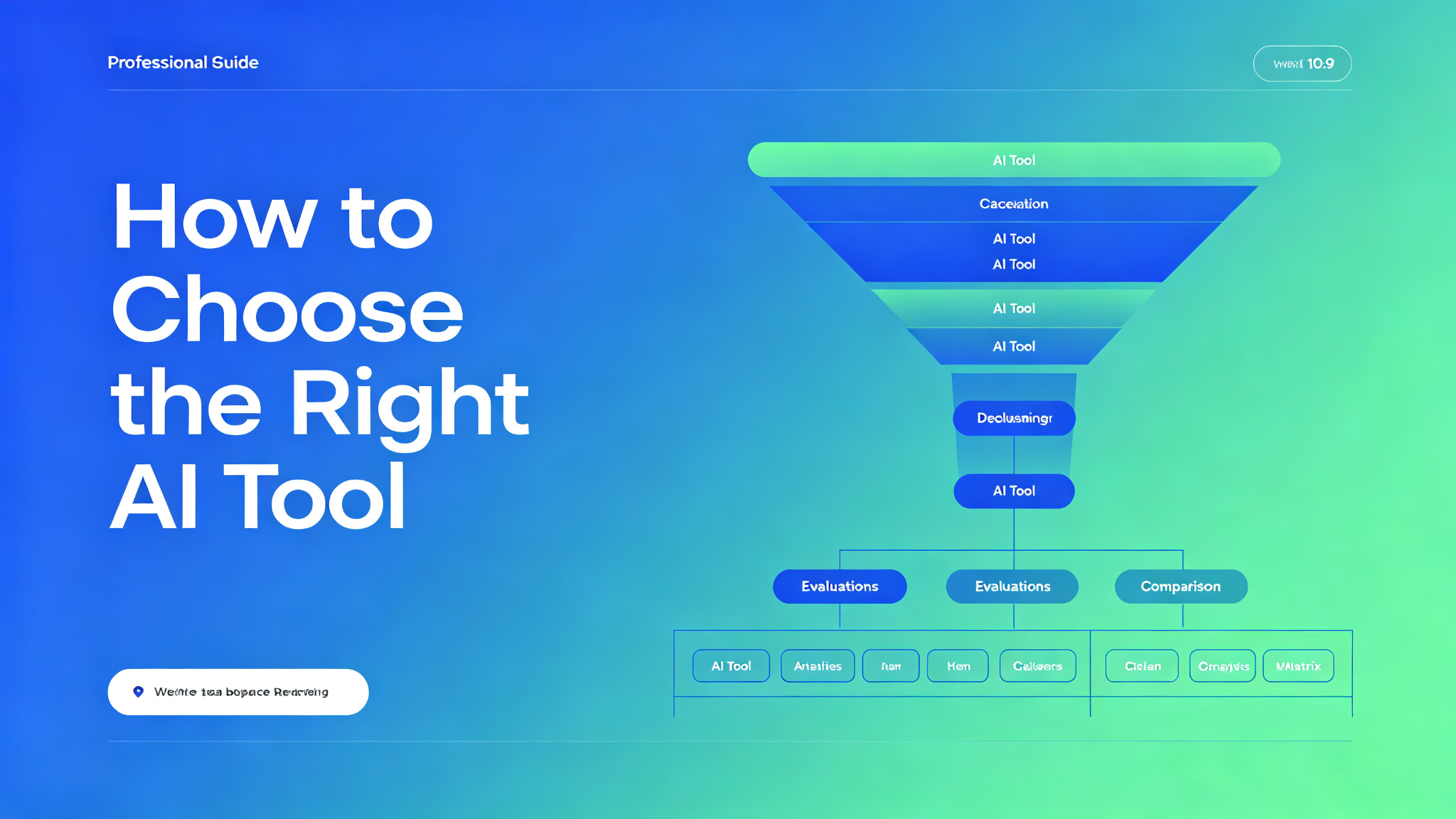
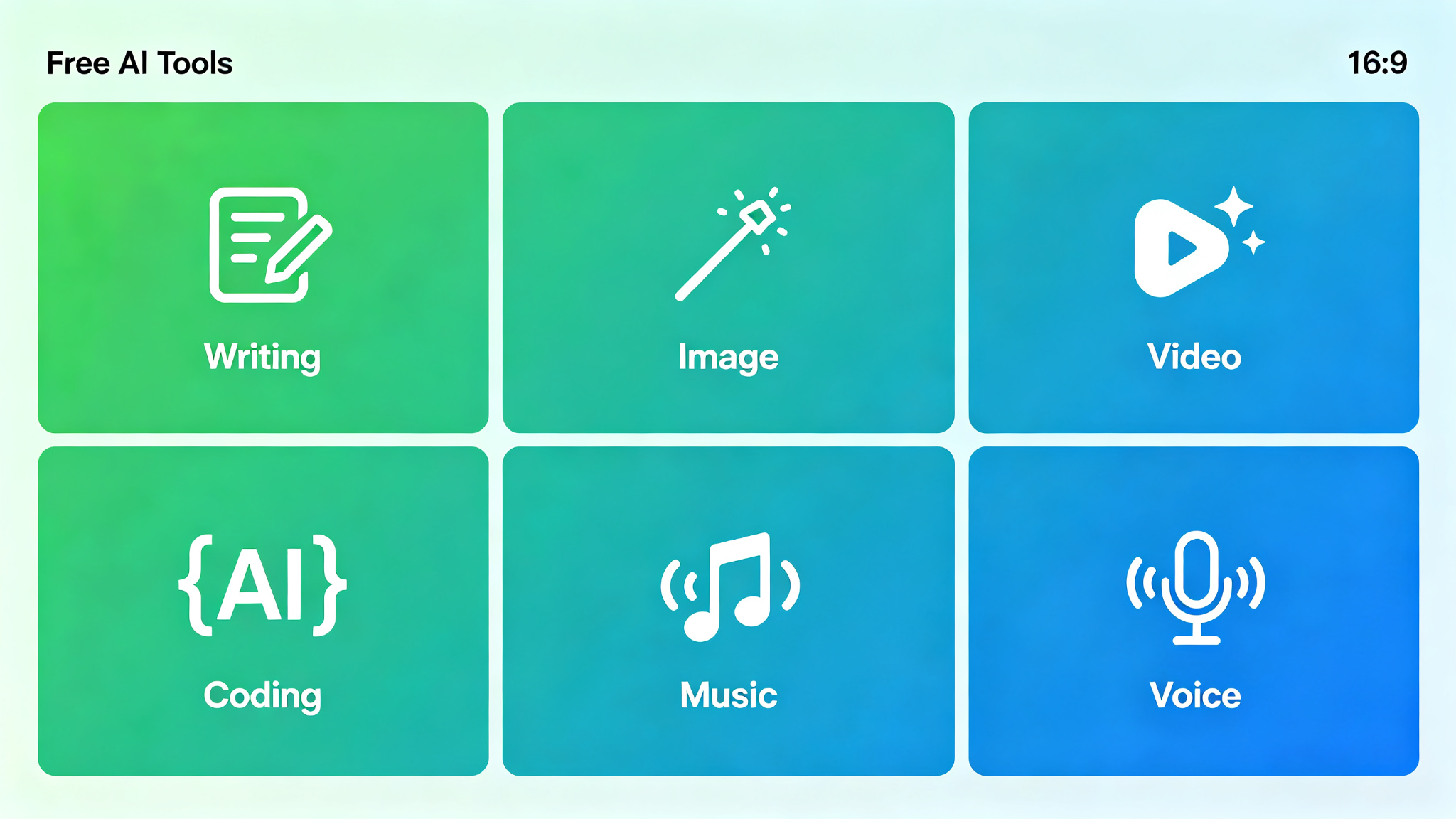
With hundreds of AI tools available, choosing the right one for your needs can be overwhelming. The right AI tool can dramatically improve your productivity and creativity, while the wrong one can waste time and money. This guide provides a practical, step-by-step framework for evaluating and selecting the best AI tool for your specific needs, whether you're looking for writing, image generation, coding, video, or any other type of AI tool.
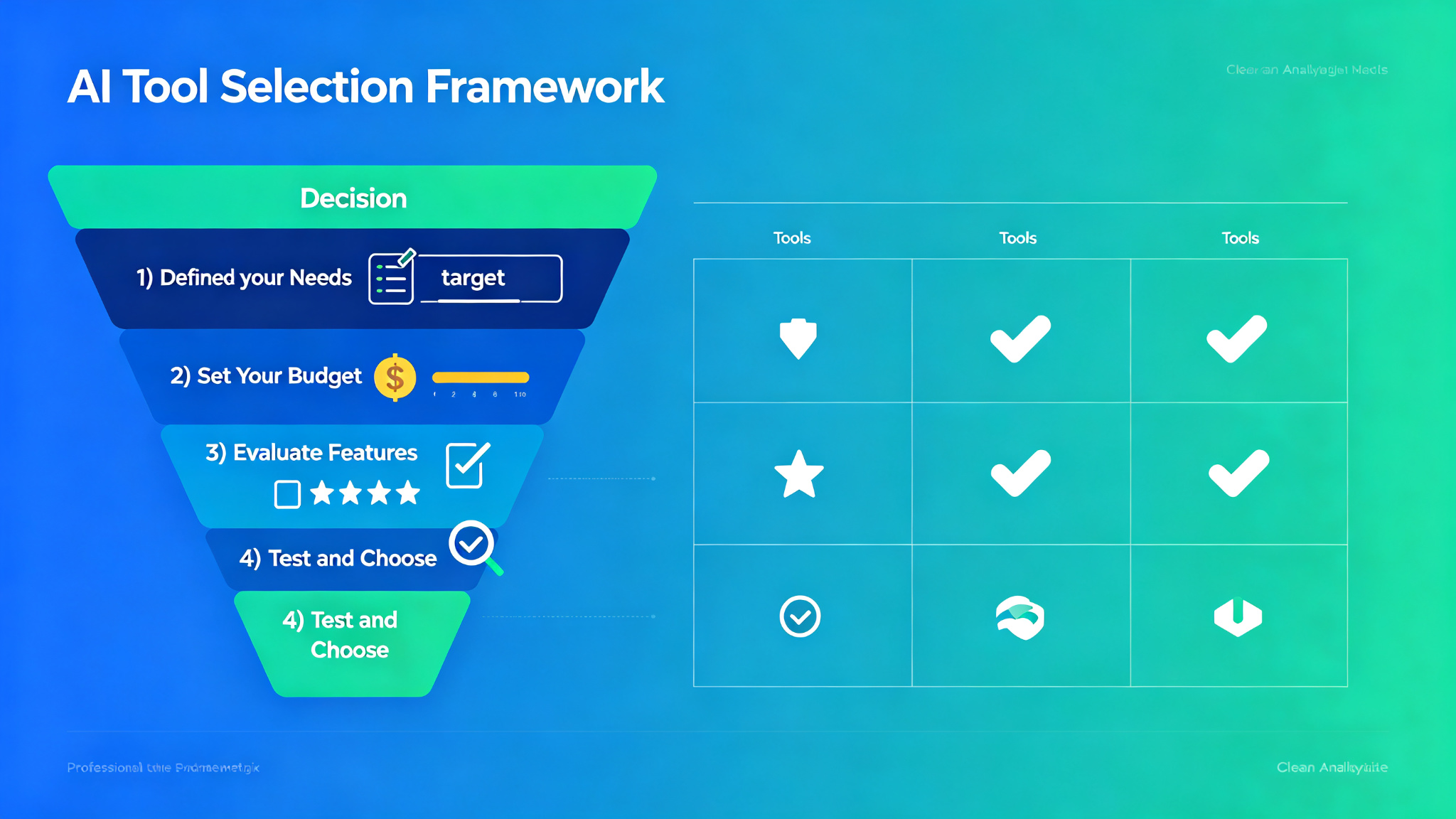
Step 1: Define Your Needs Clearly
Before you start evaluating AI tools, you need to clearly define what you need. The more specific you can be about your use case, the easier it will be to find the right tool. Start by answering these questions:
- **What task do you need to accomplish?** (writing, image generation, coding, video, etc.)
- **What's your specific use case?** (blog posts, social media images, code completion, etc.)
- **What's your skill level?** (beginner, intermediate, advanced)
- **What's your budget?** (free, under $20/month, enterprise)
- **What integrations do you need?** (specific software, platforms, APIs)
- **What are your must-have features?** (specific capabilities you can't live without)
Step 2: Research and Identify Candidates
Once you've defined your needs, research the AI tools that could meet them. Start with a broad search, then narrow down to 3-5 top candidates to evaluate more closely.
Good sources for finding AI tools: PromptWisp's AI Tools directory, product review sites, YouTube tutorials, social media recommendations, and asking colleagues in your industry.
Step 3: Evaluate Each Tool
For each candidate tool, evaluate it against your specific needs and criteria. Here are the key factors to consider:
- **Features and capabilities**: Does it do what you need? How well does it do it?
- **Ease of use**: Is it intuitive and easy to learn? How good is the onboarding?
- **Output quality**: How good are the results? Does it meet your quality standards?
- **Speed and performance**: How fast does it work? Are there limits or wait times?
- **Pricing and value**: Is it worth the cost? Are there hidden fees or limits?
- **Customer support**: How good is the support? Is there documentation and community?
- **Integrations**: Does it work with the tools you already use?
- **Privacy and security**: How does it handle your data? Is it compliant with regulations?
Step 4: Test with Free Trials
The best way to evaluate an AI tool is to actually use it. Most AI tools offer free trials or free tiers — take advantage of these to test the tools with your real-world tasks before committing.
- Test with your actual tasks, not generic examples
- Evaluate the quality of output for your specific use case
- Test the user experience and how easy it is to learn
- Check performance and speed with real workloads
- Test customer support by asking questions
- Compare results across multiple tools side by side
Step 5: Make Your Decision
After testing the candidates, it's time to make your decision. Weigh the pros and cons of each tool based on your evaluation, and choose the one that best meets your needs and budget.
- Create a comparison table with your key criteria and score each tool
- Consider both quantitative factors (price, features) and qualitative factors (ease of use, support)
- Think about long-term value, not just immediate needs
- Consider scalability — will the tool grow with you?
- Don't overthink it — you can always switch tools later
- Start with a monthly plan before committing to annual
Common Mistakes to Avoid
When choosing an AI tool, avoid these common mistakes that can lead to poor decisions:
- **Choosing based on hype**: Don't pick a tool just because it's popular — make sure it meets your needs
- **Ignoring free trials**: Always test before you buy — demos and reviews aren't enough
- **Overpaying for features**: Don't pay for enterprise features you'll never use
- **Underestimating learning curve**: Consider how long it will take to learn and adopt the tool
- **Ignoring integration needs**: Make sure the tool works with your existing workflow
- **Forgetting about support**: Good customer support can make a big difference when you need help
- **Not considering privacy**: Be careful with tools that don't have clear data policies
Key Takeaways
- Start by clearly defining your needs — the more specific, the better
- Research multiple candidates and narrow down to 3-5 top options
- Evaluate tools based on features, ease of use, quality, price, support, and integrations
- Always test with free trials using your real-world tasks before committing
- Create a comparison table to objectively compare your top candidates
- Consider long-term value and scalability, not just immediate needs
- Don't overthink it — you can always switch tools later if needed
Final Thoughts
Choosing the right AI tool is an important decision that can significantly impact your productivity and creativity. By following this structured framework — defining your needs, researching candidates, evaluating options, testing with free trials, and making an informed decision — you can select the AI tool that best meets your specific needs and budget. Remember that there's no single 'best' AI tool — the best tool is the one that works best for your specific use case, workflow, and preferences. And don't worry about making the perfect decision — you can always try different tools and switch later if needed. The most important thing is to start using AI tools and finding what works for you. With the right AI tool in your toolkit, you'll be amazed at how much more you can accomplish.