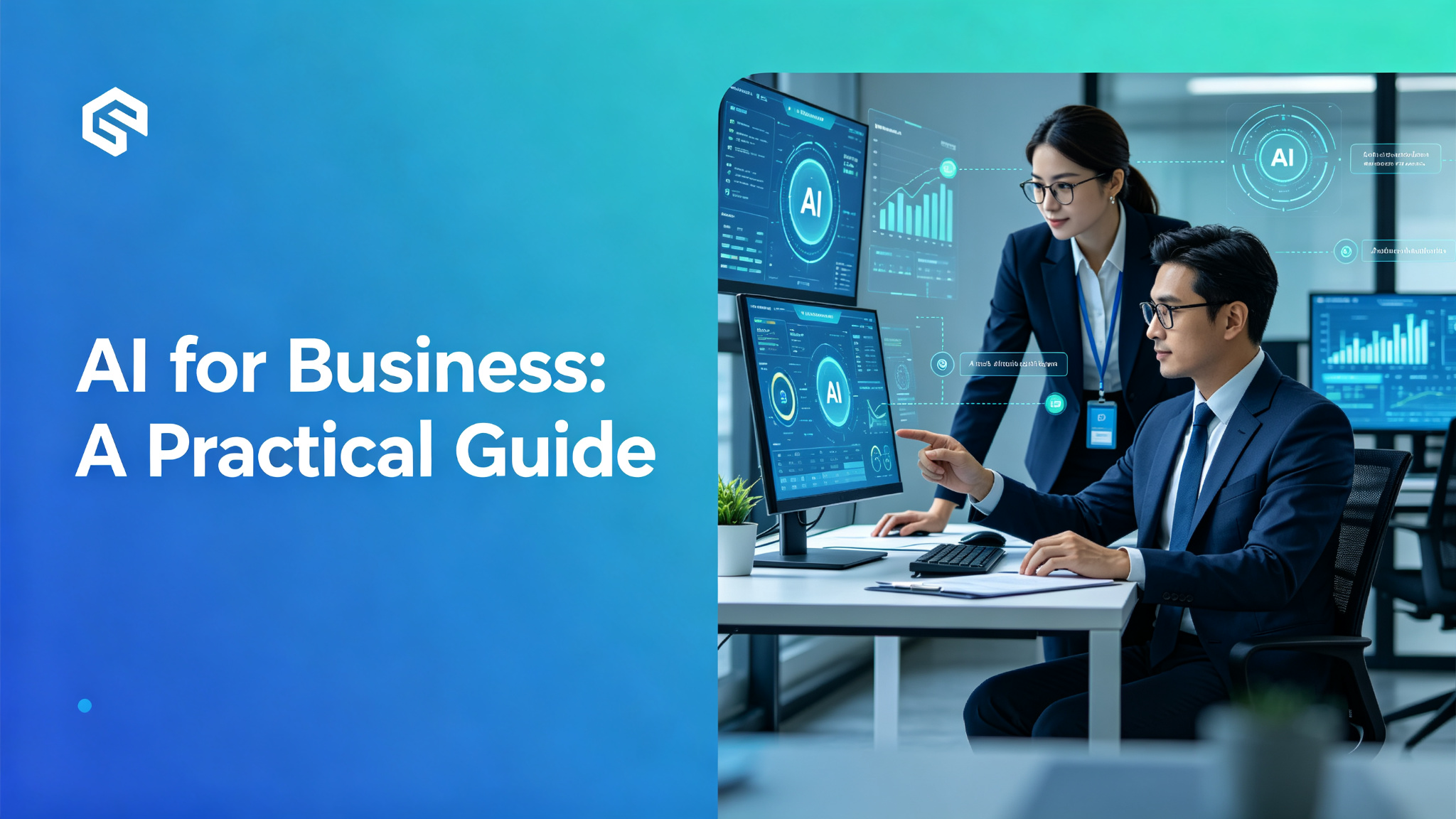
Artificial intelligence is no longer a futuristic concept — it's a practical business tool that's transforming how companies operate, compete, and grow. From automating repetitive tasks to generating insights from data, AI offers tremendous value for businesses of all sizes. This practical guide will help you understand how to implement AI in your business, where to start, and how to measure success.
Why AI Matters for Your Business
AI is transforming business operations across every industry. Companies that embrace AI are gaining competitive advantages in productivity, customer experience, and decision-making. Here's why AI should be on your business agenda:
- **Efficiency**: Automate repetitive tasks and free your team for higher-value work
- **Insights**: Analyze large datasets to uncover patterns and opportunities
- **Customer experience**: Deliver personalized experiences at scale
- **Cost savings**: Reduce operational costs through automation and optimization
- **Competitive advantage**: Stay ahead of competitors who are already using AI
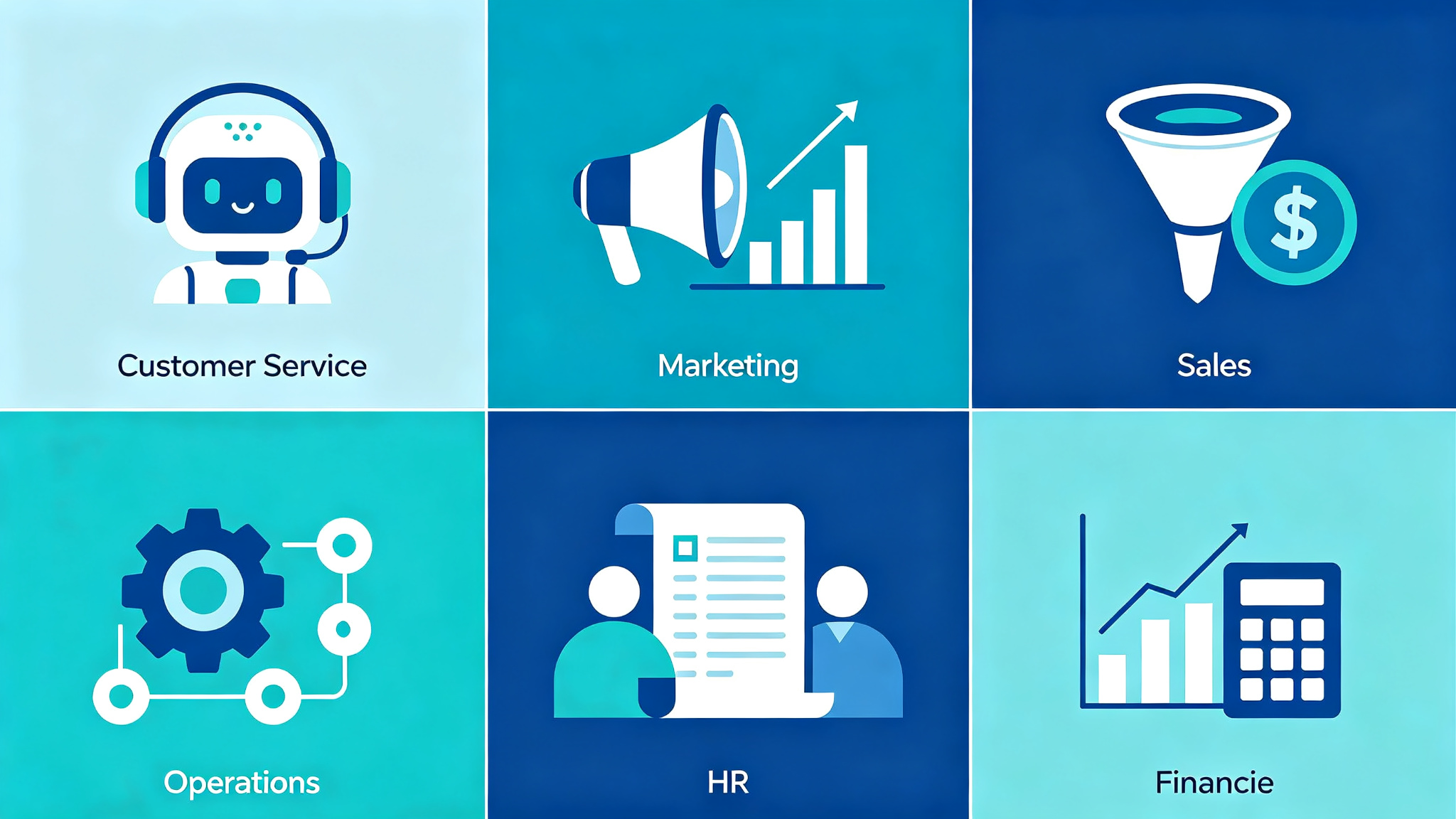
Top AI Use Cases by Department
AI can add value across every department in your organization. Here are the most impactful use cases to consider:
Start with one or two high-impact use cases rather than trying to implement AI everywhere at once. Quick wins build momentum and demonstrate ROI.
How to Get Started with AI
Implementing AI in your business doesn't have to be complicated or expensive. Follow these practical steps to get started:
- 1. **Identify opportunities**: Look for repetitive, time-consuming tasks that could be automated
- 2. **Start small**: Choose one high-impact use case and implement it well
- 3. **Choose the right tools**: Evaluate AI tools based on your needs, budget, and technical capabilities
- 4. **Train your team**: Ensure your team has the skills and knowledge to use AI effectively
- 5. **Measure results**: Track key metrics and ROI to demonstrate value and justify further investment
- 6. **Scale gradually**: Expand AI usage based on what works and delivers results
Choosing the Right AI Tools
There are hundreds of AI tools available, and choosing the right ones can be overwhelming. Focus on tools that solve specific business problems, integrate with your existing systems, and offer good value for your budget.
- Look for tools with free trials so you can test before committing
- Prioritize tools that integrate with your existing software stack
- Consider ease of use — your team needs to actually use the tools
- Evaluate customer support and documentation quality
- Check data security and privacy compliance
Measuring AI ROI
To justify AI investment and make informed decisions, you need to measure ROI. Track both quantitative metrics (time saved, cost reduction, revenue increase) and qualitative benefits (improved morale, better customer satisfaction, competitive positioning).
- Time saved on automated tasks × hourly rate = direct cost savings
- Revenue increase from AI-powered sales and marketing efforts
- Cost reduction from improved efficiency and reduced errors
- Customer satisfaction scores and retention rates
- Employee productivity and satisfaction metrics
Key Takeaways
- Start small with one high-impact use case and scale gradually
- Focus on tools that solve specific business problems, not shiny objects
- Invest in training — your team needs to know how to use AI effectively
- Measure both quantitative and qualitative ROI
- Prioritize data security and privacy when choosing AI tools
- Stay updated on new AI tools and features — the space evolves rapidly
- Create an AI strategy that aligns with your business goals
Final Thoughts
AI is transforming business, and the companies that embrace it strategically will gain significant competitive advantages. By starting small, focusing on high-impact use cases, choosing the right tools, and measuring ROI, you can implement AI in your business effectively and achieve tangible results. Remember that AI is a tool to enhance your team's capabilities, not replace them. The most successful businesses use AI to automate repetitive tasks, generate insights, and free their people to focus on creative, strategic, and high-value work. Start your AI journey today and position your business for success in the AI-powered future.