Artificial intelligence is transforming how we work, create, and live — but if you're new to AI, it can feel overwhelming. With so many tools, terms, and concepts, where do you even start? This complete beginner's guide will walk you through everything you need to know to get started with AI, from understanding the basics to using AI tools effectively and building your first projects. No technical background required.
What Is AI? A Simple Explanation
Artificial Intelligence (AI) refers to computer systems that can perform tasks that typically require human intelligence. This includes things like understanding language, recognizing images, making decisions, and learning from experience. You don't need to understand the technical details to use AI effectively — just know that AI tools can help you with a wide range of tasks.
- **Machine Learning**: AI that learns from data rather than being explicitly programmed
- **Natural Language Processing (NLP)**: AI that understands and generates human language (ChatGPT, etc.)
- **Generative AI**: AI that creates new content — text, images, video, music, code
- **AI Agents**: AI that can perform multi-step tasks autonomously
- **Prompt**: The input you give to an AI tool to get a desired output
Step 1: Try Your First AI Tool
The best way to learn about AI is to use it. Start with a free, easy-to-use AI chatbot and experiment with different tasks. Don't worry about being an expert — just explore and have fun.
Start with ChatGPT (free), Google Gemini (free), or Claude (free tier). These are the most popular and user-friendly AI chatbots. Create a free account and start chatting!
Step 2: Learn the Basics of Prompting
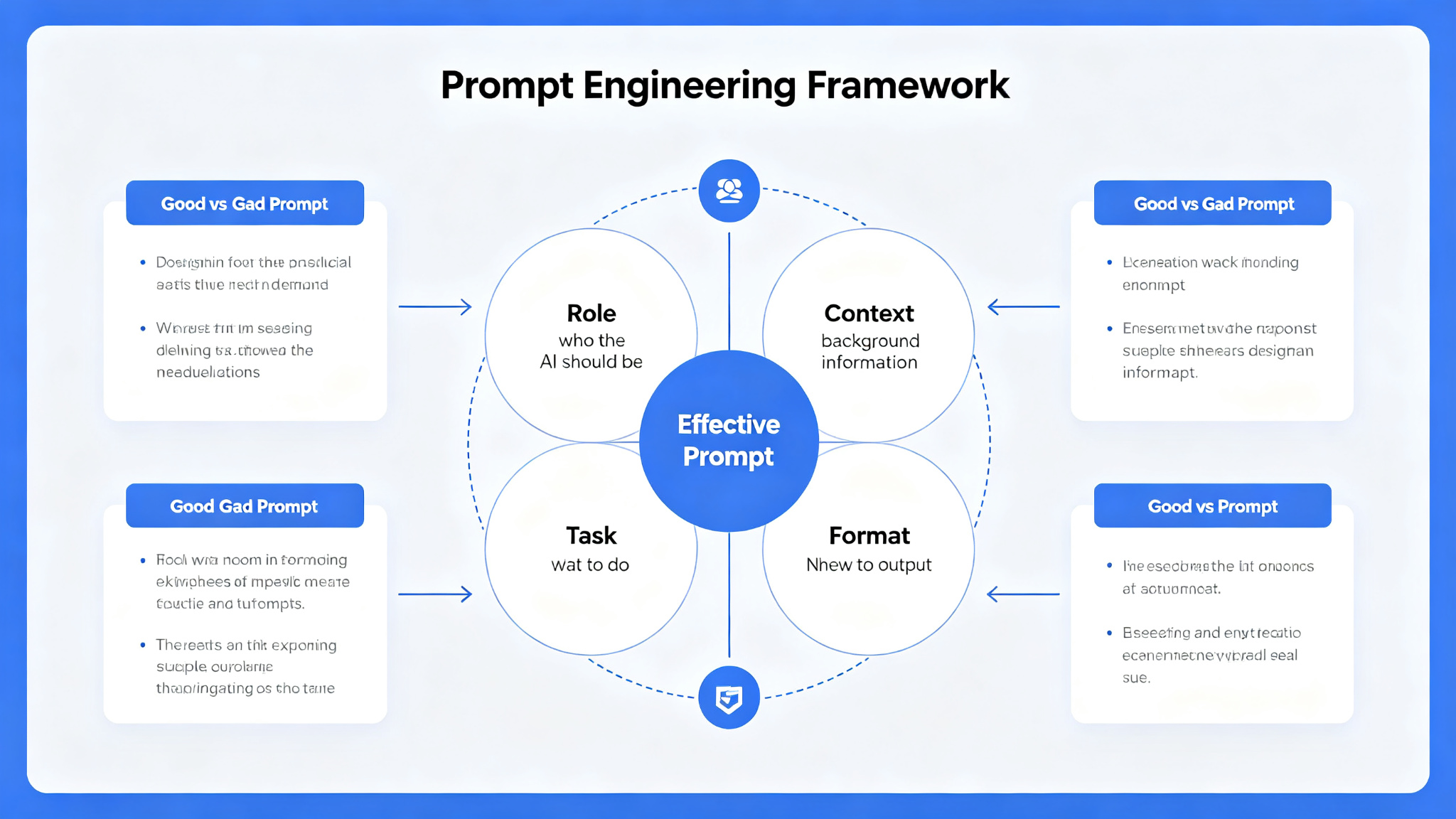
A prompt is what you type into an AI tool to get a result. Learning to write good prompts is the most important skill for using AI effectively. The key principles are: be specific, provide context, and specify the format you want.
- **Be specific**: 'Write a 500-word blog post about 5 tips for better sleep' beats 'write about sleep'
- **Provide context**: 'I'm a beginner photographer' helps AI tailor its response
- **Specify format**: 'Output as a numbered list' or 'Use a professional tone'
- **Give examples**: Show AI what you want by providing examples
- **Iterate**: If the first result isn't perfect, refine your prompt and try again
Step 3: Explore Different AI Tools
Once you're comfortable with AI chatbots, explore other types of AI tools. There are AI tools for almost every task — image generation, video creation, coding, music, design, and more.
- **Image generation**: Midjourney, DALL-E, Stable Diffusion — create images from text
- **Video creation**: Runway, Pika, Sora — generate and edit videos with AI
- **Coding**: GitHub Copilot, Cursor — write and debug code faster
- **Design**: Canva AI, Adobe Firefly — create designs and graphics
- **Music**: Suno, Udio — generate music from text descriptions
- **Productivity**: Notion AI, Grammarly — improve your writing and workflow
Step 4: Build Your First AI Project
The best way to deepen your AI skills is to build something. Choose a project that interests you and use AI tools to bring it to life. It doesn't have to be complicated — start small and build from there.
- Write a blog post or ebook using AI writing tools
- Create a series of AI-generated images for social media
- Build a simple website with AI coding assistance
- Make a short video with AI video tools
- Create a podcast or music track with AI audio tools
- Automate a repetitive task in your workflow with AI
Common AI Mistakes to Avoid
As a beginner, it's easy to make these common mistakes. Avoid them to get better results and use AI more effectively:
- **Trusting AI blindly**: Always fact-check AI output — it can make mistakes
- **Being too vague**: Specific prompts get better results than vague ones
- **Expecting perfection**: AI is a tool, not a replacement — refine its output
- **Trying to learn everything at once**: Start with one tool and master it
- **Not iterating**: The first result is rarely perfect — refine and try again
- **Ignoring privacy**: Be careful about sharing sensitive information with AI tools
Key Takeaways
- Start by using AI — the best way to learn is by doing
- Begin with a free AI chatbot like ChatGPT, Gemini, or Claude
- Learn to write good prompts — be specific, provide context, specify format
- Explore different AI tools for different tasks (images, video, coding, music)
- Build something — projects are the best way to deepen your skills
- Always fact-check AI output — it can make mistakes and hallucinate
- Start small and build gradually — don't try to learn everything at once
Final Thoughts
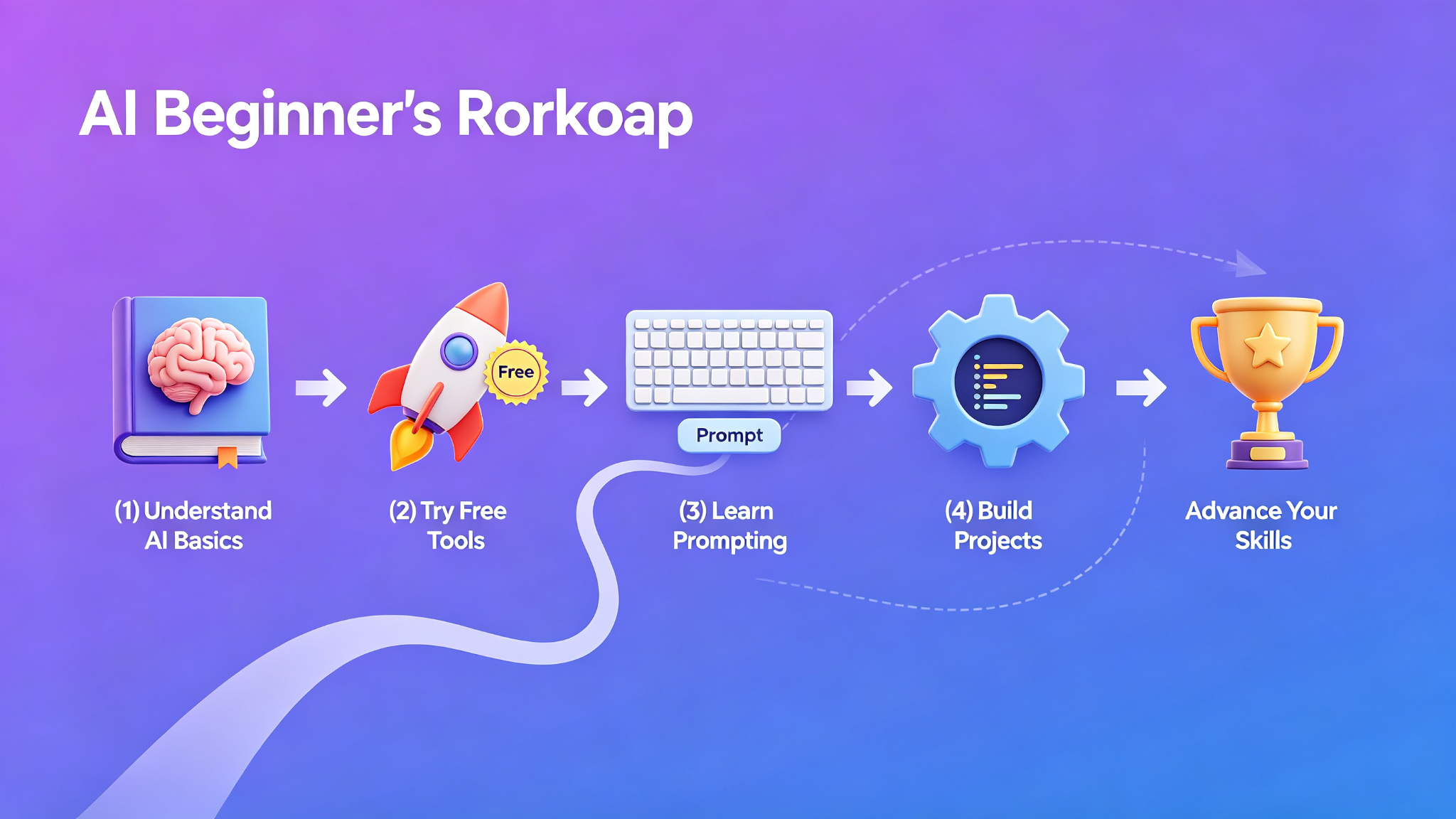
Getting started with AI doesn't have to be complicated or intimidating. By following this beginner's roadmap — understanding the basics, trying your first AI tool, learning to prompt effectively, exploring different tools, and building your first project — you'll be well on your way to becoming confident and capable with AI. Remember that everyone starts as a beginner, and the most important thing is to start experimenting and learning by doing. AI is a powerful tool that can enhance your creativity, productivity, and capabilities — but it's only as good as how you use it. Start your AI journey today, and remember that the best time to start was yesterday, but the second best time is now.