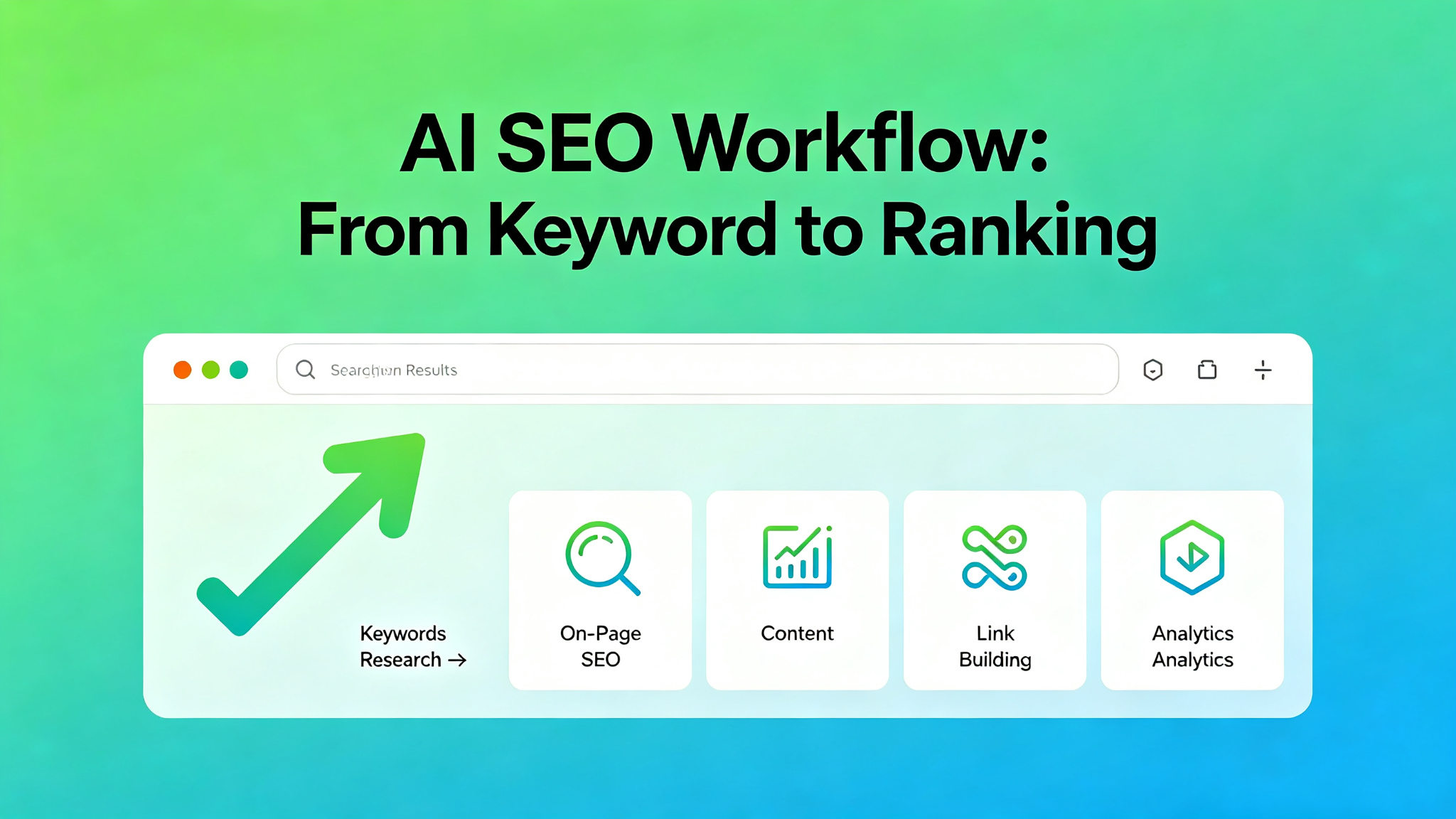
A well-defined SEO workflow is essential for consistent, high-quality results. When you integrate AI into your workflow, you can automate repetitive tasks, generate ideas faster, and produce better output in less time. This guide walks you through a complete AI-powered SEO workflow, from start to finish, with practical steps, recommended tools, and pro tips for success.
Why You Need an AI-Powered Seo Workflow
Without a structured workflow, SEO can feel chaotic and inefficient. You might waste time on repetitive tasks, miss important steps, or produce inconsistent quality. An AI-powered workflow solves these problems by:
- Automating repetitive and time-consuming tasks
- Providing structure and consistency to your process
- Generating ideas and first drafts in seconds
- Reducing errors and improving quality
- Freeing you to focus on creative and strategic work
- Enabling you to produce more output in less time
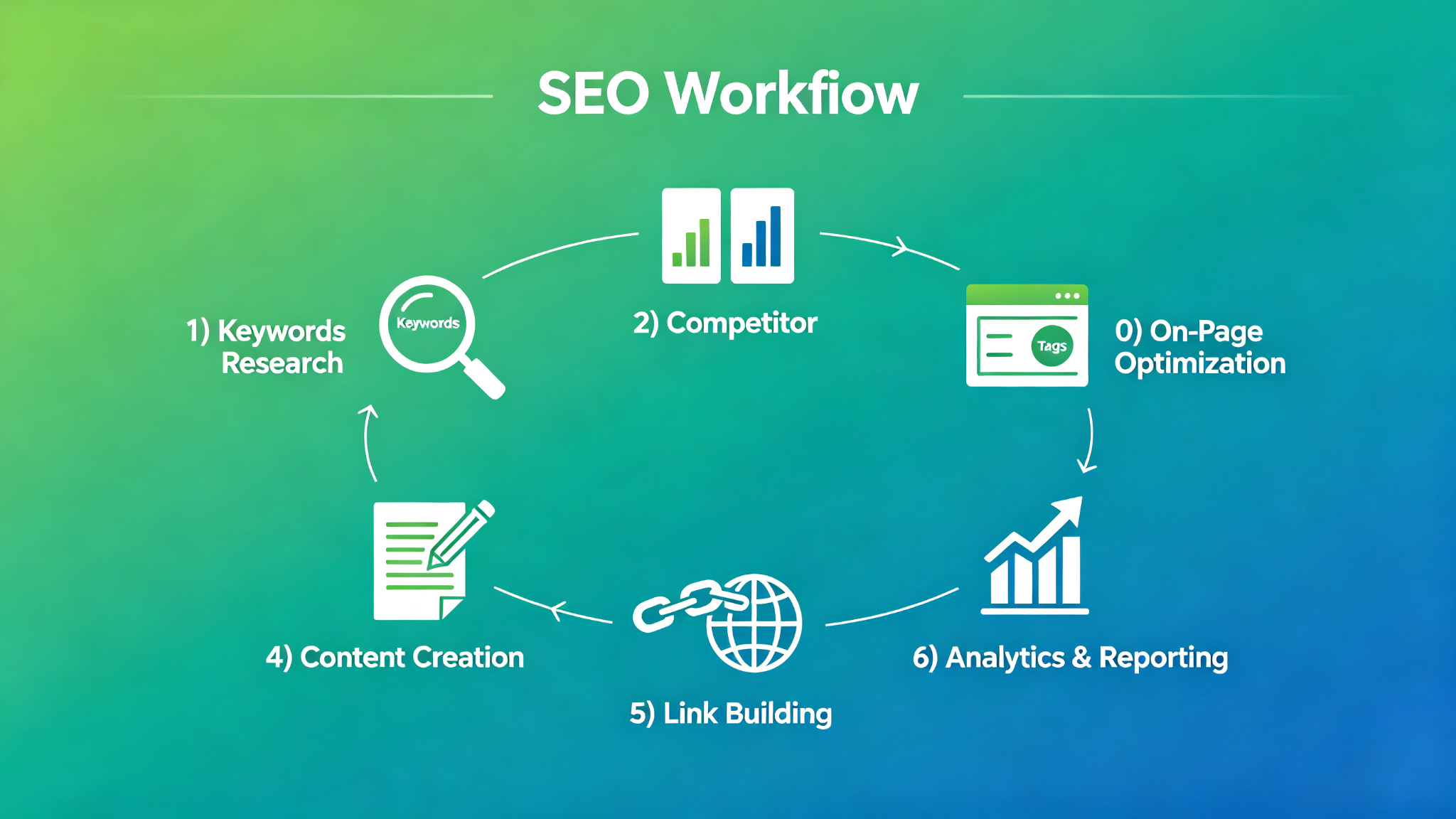
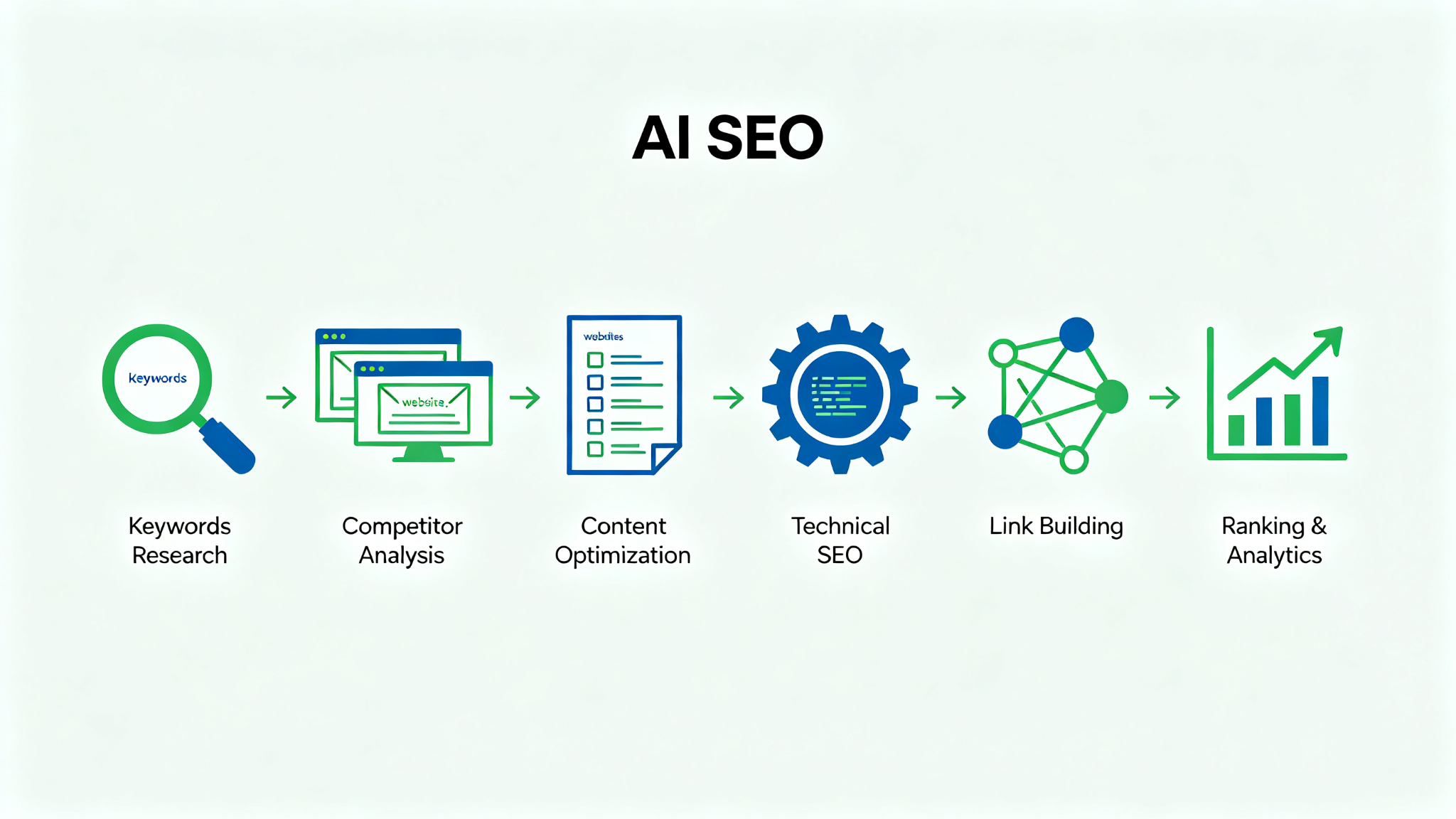
The Complete AI Seo Workflow
Step 1: Keyword Research and Opportunity Analysis
Effective SEO starts with finding the right keywords to target. Use AI to generate keyword ideas, analyze search intent, and identify high-opportunity keywords that you can realistically rank for.
AI usage: Use AI to generate hundreds of keyword ideas from seed keywords, analyze search intent for each keyword, estimate keyword difficulty and opportunity, and group keywords into topic clusters.
- Start with seed keywords related to your business
- Use AI to generate 100+ keyword ideas
- Analyze search intent for each keyword
- Select target keywords based on opportunity and relevance
Step 2: Competitor Analysis and Gap Identification
Analyze your competitors to understand what's working in your niche and identify content gaps you can exploit. AI can help you analyze competitor content, identify their top-ranking pages, and find opportunities they've missed.
AI usage: Use AI to analyze competitor websites and content, identify their top-ranking pages and keywords, find content gaps they haven't covered, and generate content ideas that outperform theirs.
- Identify your top 3-5 SEO competitors
- Analyze their top-ranking pages and keywords
- Identify content gaps and opportunities
- Create a list of topics to target
Step 3: On-Page SEO and Content Optimization
Optimize your web pages for search engines. AI can help you optimize titles, meta descriptions, headings, content structure, and internal linking to maximize your search visibility.
AI usage: Use AI to generate SEO-optimized titles and meta descriptions, suggest heading structures and content outlines, optimize content for target keywords, and identify internal linking opportunities.
- Optimize page titles with primary keywords
- Write compelling meta descriptions that drive clicks
- Structure content with proper heading hierarchy
- Optimize content for target keywords and related terms
Step 4: Content Creation and Optimization
Create high-quality, SEO-optimized content that ranks well and provides value to your audience. AI can help you research topics, create outlines, write content, and optimize it for search engines.
AI usage: Use AI to research your topic and identify key points to cover, create detailed content outlines, write high-quality first drafts, and optimize content for SEO while maintaining readability and value.
- Research your topic thoroughly
- Create a detailed content outline
- Write comprehensive, valuable content
- Optimize content for SEO and readability
Step 5: Link Building and Off-Page SEO
Build high-quality backlinks to improve your site's authority and rankings. AI can help you identify link building opportunities, generate outreach templates, and manage your link building campaigns.
AI usage: Use AI to identify link building opportunities, generate personalized outreach email templates, analyze backlink profiles, and suggest strategies for earning high-quality backlinks.
- Identify link building opportunities (guest posts, resource pages, etc.)
- Create personalized outreach templates with AI
- Build relationships with other site owners
- Monitor and track your backlink profile
Step 6: Analytics, Reporting, and Continuous Improvement
Track your SEO performance and continuously improve your strategy. AI can help you analyze traffic data, identify trends, generate reports, and suggest optimizations to improve your rankings.
AI usage: Use AI to analyze your SEO performance data, identify ranking trends and patterns, generate automated reports, and suggest actionable improvements for your SEO strategy.
- Track keyword rankings and organic traffic
- Analyze user behavior and engagement metrics
- Generate regular SEO performance reports
- Identify opportunities and optimize your strategy
Recommended AI Tools
Here are the best AI tools for each stage of your SEO workflow:
- **Keyword research**: Ahrefs, SEMrush, Surfer SEO for keyword research
- **Competitor analysis**: Ahrefs, SEMrush, SpyFu for competitor analysis
- **Content creation**: ChatGPT, Claude, Jasper for content writing
- **On-page SEO**: Surfer SEO, Clearscope, Frase for content optimization
- **Link building**: Pitchbox, BuzzStream, Hunter.io for outreach
- **Analytics**: Google Analytics, Google Search Console, Ahrefs
Pro Tips for Success
- Focus on user intent — create content that answers what searchers want
- Create comprehensive, in-depth content that covers topics thoroughly
- Optimize for featured snippets and people also ask boxes
- Build high-quality backlinks — they're still a top ranking factor
- Improve page speed and mobile experience
- Use internal linking to distribute authority across your site
- Be patient — SEO takes time, but the results are long-lasting
Final Thoughts
An AI-powered SEO workflow can dramatically improve your search engine rankings and organic traffic. By following this six-step workflow — keyword research, competitor analysis, on-page optimization, content creation, link building, and analytics — you can create a comprehensive SEO strategy that drives sustainable organic growth. AI tools can help you at every stage, from generating keyword ideas to optimizing content and analyzing performance, saving you time and helping you make data-driven decisions. Remember that SEO is a long-term strategy — it takes time to see results, but the traffic you earn is sustainable and valuable. Start implementing this AI-powered SEO workflow today and watch your organic traffic grow over time.