Monocolor Editorial Print — one-ink & two-ink poster skill
A one-ink and controlled two-ink editorial image skill for posters, zines, portraits, packaging, and visual field notes. Turn any theme, phrase, object, or photo into an original editorial print with warm paper, halftone texture, and sharp typographic contrast.
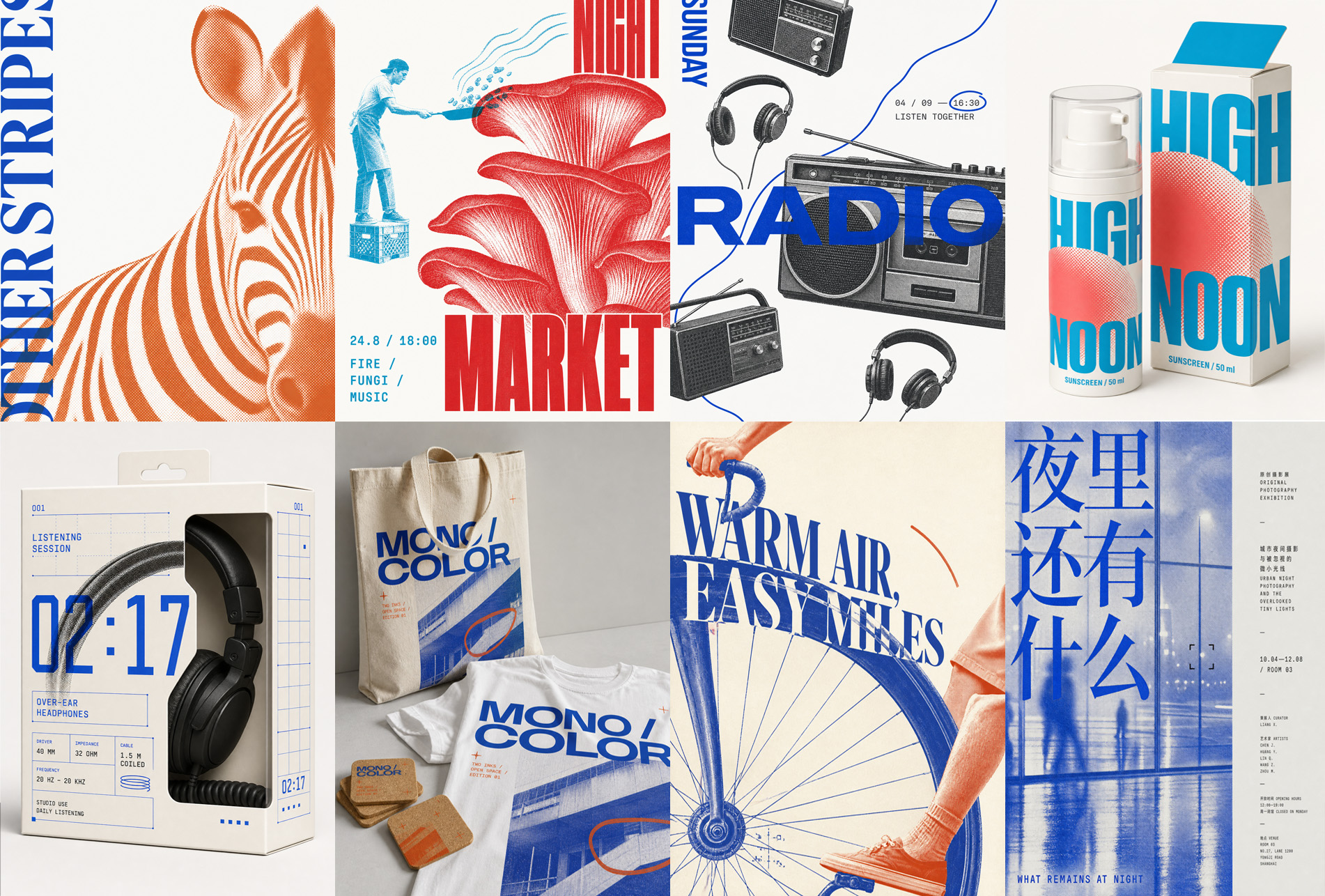
Prompt template
Create an editorial print in a strict one-ink or controlled two-ink system.

Subject: [your theme, phrase, object, or photo description]
Layout: [image | specimen | declaration | object-field | overprint | journal | cover]
Ink: [Cobalt | Royal Blue | Botanical Green | Mint Green | Terracotta Orange | Signal Red | Aubergine | Charcoal] OR [two-ink recipe: Powder Blue+Signal Red, Cobalt+Terracotta, Botanical Green+Oxblood, etc.]
Paper: warm uncoated ivory stock, 25%-55% visible empty paper
Print process: coarse halftone, risograph grain, mild registration drift, ink pooling at edges
Typography: serif editorial voice for headline + condensed sans or monospaced utility for microcopy, 5-12x size contrast
Composition: asymmetric editorial grid, one deliberate disruption, no centered templates

Rules:
- No more than two printing inks; paper is not a third color
- Mechanical reproduction leads: photographs become dots, grain, clipped highlights
- Silence has structure: empty paper controls pacing
- Identity stays intact: supplied people/objects remain recognizable
- Not a full-color photo with monochrome filter; not glossy mockup or gradient poster
How to use
- 1Read the input -> identify subject, intent, words, and image role
- 2Choose the layout -> image, specimen, declaration, object field, overprint, journal, or cover
- 3Assign the plates -> default to one ink; give each plate a clear role when using two
- 4Compose the page -> preserve 25%-55% silence and add one deliberate disruption
- 5Generate and inspect -> check ink count, identity, hierarchy, texture, and originality
Pro tips
- One ink is the default; two inks require distinct plate roles and a subject-driven reason
- The dominant plate carries 70%-85% of printed area; accent plate carries 15%-30%
- Use coarse halftone for photographs, risograph grain for illustration, cyanotype for blueprints
- Leave at least 25% empty paper — silence is part of the design
- Type contrast should be 5-12x between headline and microcopy
- Avoid centered templates, card grids, sticker collages, and decorative blobs
Use cases
Examples
Midnight convenience store poster
Input: Vertical poster about a midnight convenience store. Exact headline: "still open".
Output: Cobalt one-ink editorial poster with coarse halftone storefront, oversized headline upper-left, small date/time microcopy bottom-right, 40% empty warm paper.
Portrait zine cover
Input: Turn a portrait into a cobalt one-ink editorial zine cover. Keep the person identity and expression.
Output: Faithful portrait rendered as coarse halftone in cobalt ink, asymmetric crop, editorial serif title, 35% visible paper, no full-color filter.
Botanical field note
Input: Create a botanical-green risograph field note about ferns. Title: "field note 07".
Output: Botanical green ink on warm paper, risograph grain texture, fern specimen illustration, handwritten-style annotations, journal layout, 45% empty space.
City cycling overprint poster
Input: Create an Ultramarine + Safety Orange overprint poster about city cycling. Let bicycle and oversized title cross in selected areas.
Output: Two-ink overprint: ultramarine dominant plate (75%) carries bicycle and grid, safety orange accent plate (25%) carries title and intersections, registration drift visible at overlaps.
Rooftop party poster
Input: Make a Signal Red one-ink party poster for a rooftop gathering. Use "after sunset" as headline and keep the date small.
Output: Signal red ink only, warm ivory paper, oversized condensed serif "after sunset", tiny date/location microcopy, one geometric disruption, 50% silence.
Key parameters
Ink palettes: Cobalt, Royal Blue, Botanical Green, Mint Green, Terracotta Orange, Signal Red, Aubergine, CharcoalTwo-ink recipes: 9 controlled combinations (Powder Blue+Signal Red, Cobalt+Terracotta, etc.)Layout modes: image, specimen, declaration, object field, overprint, journal, coverEmpty paper: 25%-55% of canvas (silence is structural)Type contrast: 5-12x between headline and microcopy, max 3 type voicesPrint processes: coarse halftone, risograph grain, cyanotype exposure, photocopy breakupNot this
- Not a full-color photograph with a monochrome filter
- Not arbitrary two-color decoration or more than two printing plates
- Not a glossy mockup, 3D render, gradient poster, or cinematic scene
- Not a centered template, card grid, sticker collage, or decorative blob system
- Not dense scrapbook grunge or torn-paper styling
- Not marketing copy, invented branding, fake sponsors, URLs, or QR codes
Works best with
Ratings & Reviews
Loading reviews…
Related Skills
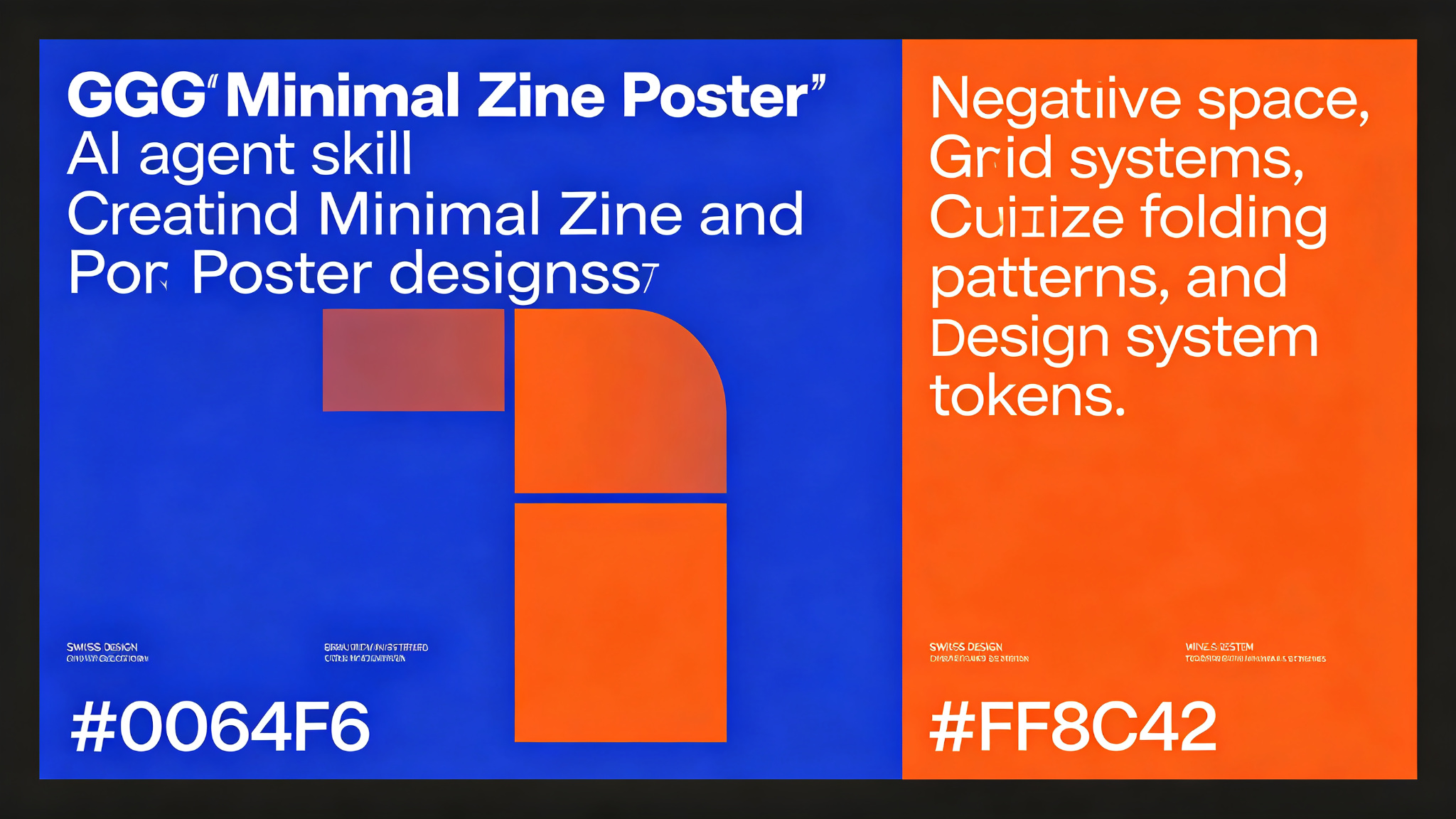
GC Minimal Zine Poster
AI agent skill for creating minimalist zine and poster designs using Swiss design principles, grid systems, and bold typography.
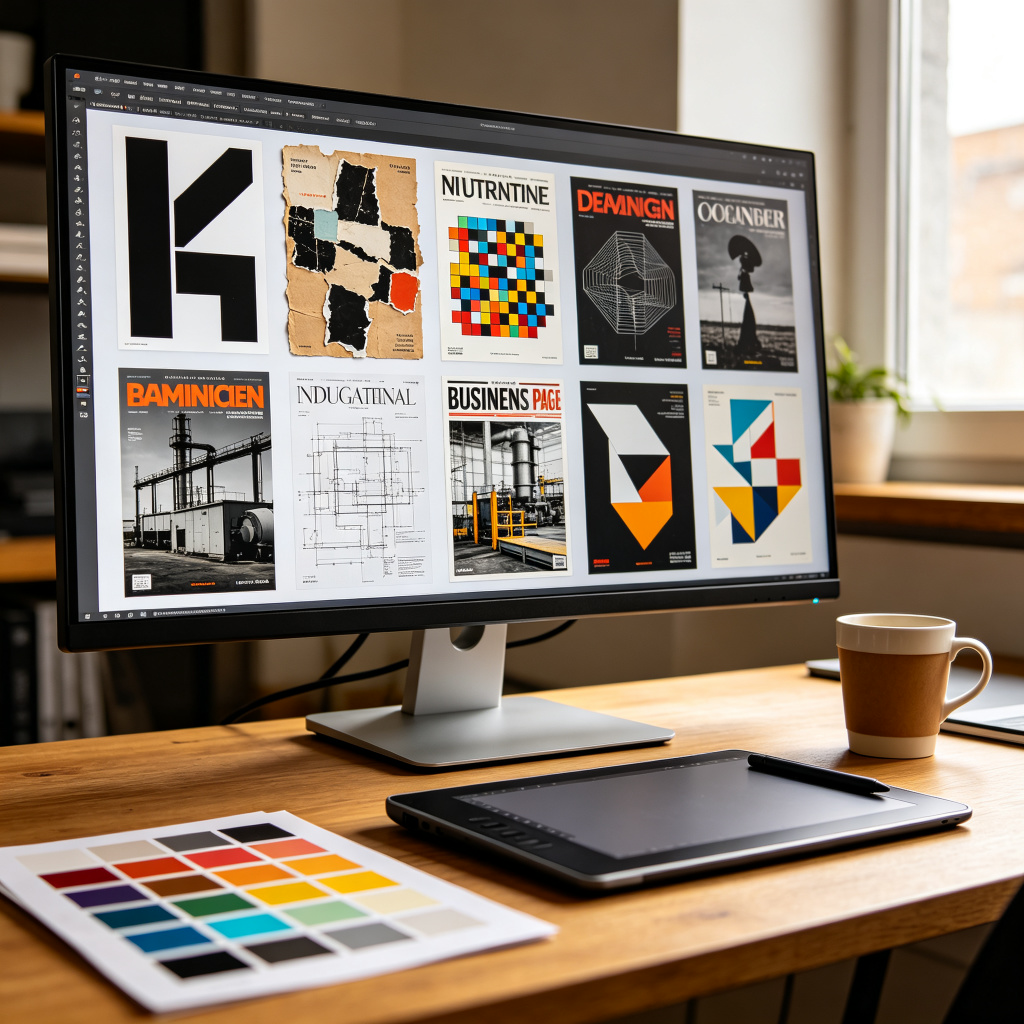
Punk Cover — generate article cover images from 32 curated visual styles
Turn articles, notes, tweets, and topic drafts into polished cover images for Xiaohongshu, WeChat public accounts, X/Twitter, and more. Selects exactly one reusable style from a shared library of 32 curated visual styles — including minimalist black-and-white, retro torn collage, pixel art metaphor, industrial OSB blueprint, business magazine front page, avant-garde geometry, layered paper-cut concept, and more — then fuses the style atom into a complete cover-specific prompt. Supports custom aspect ratios, multi-size suites, and prompt-only output mode.
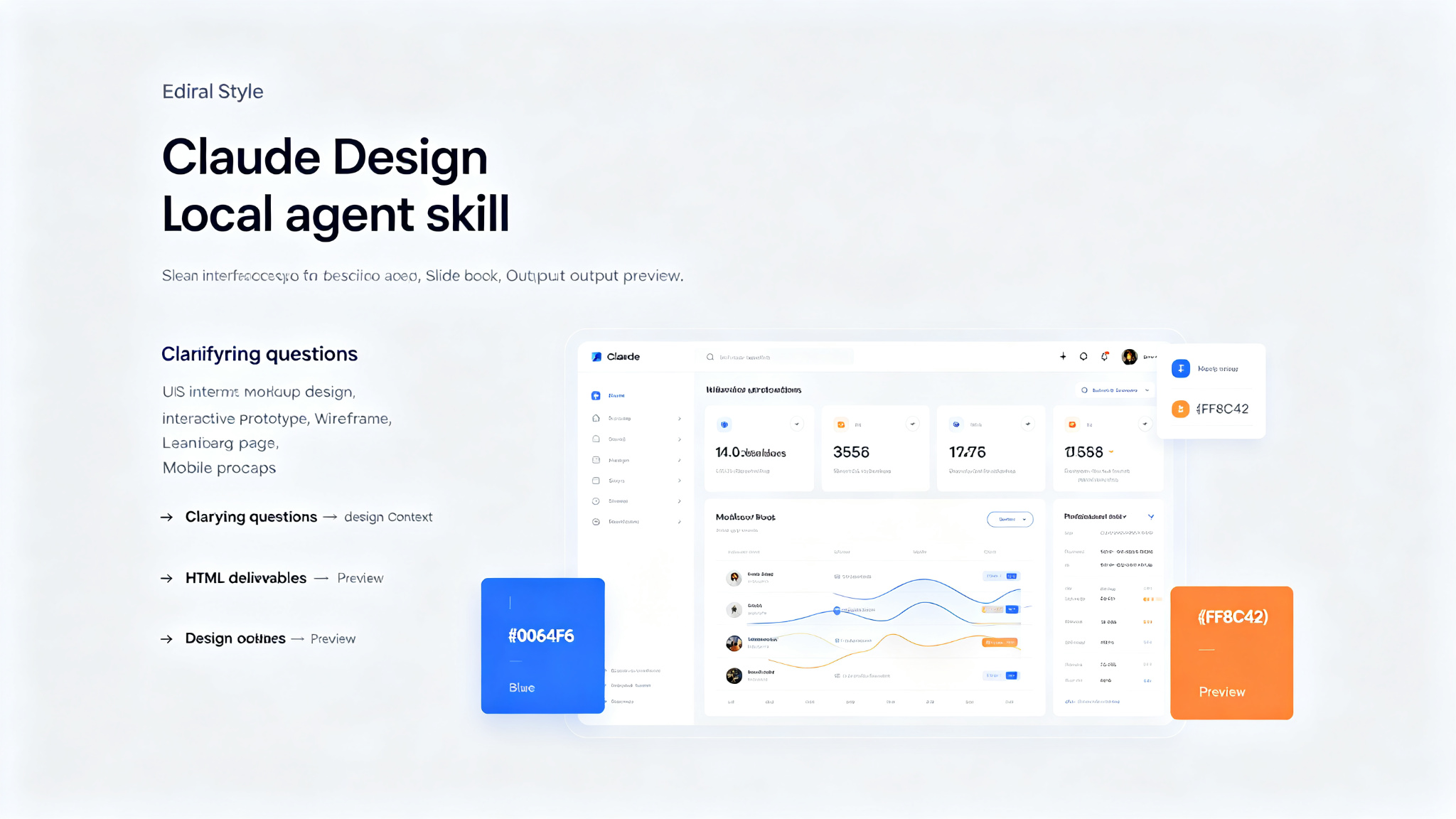
Baoyu Design — Claude Design as a portable local Agent Skill
Packages Claude Design — the design engine behind claude.ai/design — as a portable Agent Skill. Drop it into a local agent (Cursor, Claude Code, Claude Desktop, or any file-capable coding agent) and you get most of what the website does, right inside your editor: polished UI mockups, interactive prototypes, wireframes, landing pages, dashboards, mobile apps, and slide decks — all produced as self-contained HTML. No website, no separate subscription, no upload step. The agent already on your machine does the work, and every artifact stays in your repo.