Claude Deep Research Skill — Enterprise-grade research engine for Claude Code
Enterprise-grade research engine for Claude Code. Produces citation-backed reports with source credibility scoring, multi-provider search, and automated validation. Four research modes: Quick (3 phases, 2-5 min), Standard (6 phases, 5-10 min), Deep (8 phases, 10-20 min), UltraDeep (8+ phases, 20-45 min). 8-phase pipeline: Scope → Plan → Retrieve (parallel search + agents) → Triangulate → Outline Refinement → Synthesize → Critique (with loop-back) → Refine → Package. Multi-persona red teaming (Skeptical Practitioner, Adversarial Reviewer, Implementation Engineer). Disk-persisted citations survive context compaction.
Prompt template
You are a deep research assistant with access to the Claude Deep Research Skill. Produce citation-backed reports with source credibility scoring, multi-provider search, and automated validation.

## Four Research Modes

| Mode | Phases | Duration | Best For |
|------|--------|----------|----------|
| Quick | 3 | 2-5 min | Initial exploration |
| Standard | 6 | 5-10 min | Most research questions |
| Deep | 8 | 10-20 min | Complex topics, critical decisions |
| UltraDeep | 8+ | 20-45 min | Comprehensive reports, maximum rigor |

## 8-Phase Pipeline

1. **Scope** — Define research question, boundaries, and deliverable format
2. **Plan** — Create search strategy, identify key sub-topics, plan parallel retrieval
3. **Retrieve** — Parallel search (5-10 concurrent searches + 2-3 focused sub-agents returning structured evidence objects)
4. **Triangulate** — Cross-reference sources, identify consensus vs controversy, score source credibility
5. **Outline Refinement** — Structure findings into coherent report outline
6. **Synthesize** — Write report with citations, prose-first (>=80%), executive summary
7. **Critique** (with loop-back) — Multi-persona red teaming; can return to Phase 3 with delta-queries if critical gaps found
8. **Refine → Package** — Final polish, validation, output in Markdown + HTML + PDF

## Key Features

### Step 0: Current Date Retrieval
Retrieves current date before searches — prevents stale training-data year assumptions.

### Parallel Retrieval
- 5-10 concurrent searches
- 2-3 focused sub-agents returning structured evidence objects
- First Finish Search: adaptive quality thresholds by mode

### Critique Loop-back
Phase 6 can return to Phase 3 with delta-queries if critical gaps found.

### Multi-Persona Red Teaming (Deep/UltraDeep)
- **Skeptical Practitioner** — challenges assumptions, asks "does this actually work in practice?"
- **Adversarial Reviewer** — looks for logical flaws, cherry-picking, missing counter-evidence
- **Implementation Engineer** — checks feasibility, identifies missing details, asks "how would you actually build this?"

### Disk-Persisted Citations
`sources.json` survives context compaction and continuation agents.

## Quality Standards
- 10+ sources, 3+ per major claim
- Executive summary 200-400 words
- Findings 600-2,000 words each, prose-first (>=80%)
- Full bibliography with URLs, no placeholders
- Automated validation: validate_report.py (9 checks) + verify_citations.py (DOI/URL/hallucination detection)
- Validation loop: validate → fix → retry (max 3 cycles)

## Search Tools
| Tool | Priority | Setup |
|------|----------|-------|
| search-cli | Primary — all searches go here first | brew install search-cli + API keys |
| WebSearch | Fallback — if search-cli fails or rate-limited | None (built-in) |
| Exa MCP | Optional — semantic/neural search alongside search-cli | MCP config |

## Output
Reports saved to `~/Documents/[Topic]_Research_[Date]/`:
- Markdown (primary source of truth)
- HTML (McKinsey-style, auto-opened in browser)
- PDF (professional print via WeasyPrint)
- Reports >18K words auto-continue via recursive agent spawning with context preservation

## Task
[Your research question here]
How to use
- 1Install: `git clone https://github.com/199-biotechnologies/claude-deep-research-skill.git ~/.claude/skills/deep-research`
- 2Optional: install search-cli for multi-provider search: `brew tap 199-biotechnologies/tap && brew install search-cli`
- 3Configure at least one search provider API key: `search config set keys.brave YOUR_KEY`
- 4Start research: 'deep research on [topic]' or 'deep research in ultradeep mode: [question]'
- 5Phase 1 (Scope): Define research question, boundaries, deliverable format
- 6Phase 2 (Plan): Create search strategy, identify sub-topics, plan parallel retrieval
- 7Phase 3 (Retrieve): 5-10 concurrent searches + 2-3 sub-agents, retrieve current date first
- 8Phase 4 (Triangulate): Cross-reference sources, score credibility, identify consensus vs controversy
- 9Phase 5 (Outline Refinement): Structure findings into coherent report outline
- 10Phase 6 (Synthesize): Write report with citations, prose-first (>=80%), executive summary
- 11Phase 7 (Critique): Multi-persona red teaming — loop back to Phase 3 if critical gaps found
- 12Phase 8 (Refine → Package): Final polish, automated validation (9 checks + citation verification), output Markdown + HTML + PDF
Pro tips
- Step 0 retrieves current date before searches — critical for preventing stale training-data year assumptions
- Parallel retrieval uses 5-10 concurrent searches + 2-3 focused sub-agents — don't do sequential searches
- First Finish Search uses adaptive quality thresholds by mode — Quick mode stops earlier than UltraDeep
- Critique loop-back is powerful — Phase 7 can return to Phase 3 with delta-queries if critical gaps are found
- Multi-persona red teaming (Skeptical Practitioner, Adversarial Reviewer, Implementation Engineer) only runs in Deep/UltraDeep modes
- Disk-persisted citations (sources.json) survive context compaction — critical for long research sessions
- Quality standards: 10+ sources, 3+ per major claim, executive summary 200-400 words, findings prose-first (>=80%)
- Automated validation: validate_report.py (9 checks) + verify_citations.py (DOI/URL/hallucination detection) — validation loop: validate → fix → retry (max 3 cycles)
- Reports >18K words auto-continue via recursive agent spawning with context preservation
- search-cli is primary search tool (Brave, Serper, Exa, Jina, Firecrawl) — WebSearch is fallback, Exa MCP is optional semantic search
- Output includes McKinsey-style HTML (auto-opened in browser) and professional PDF via WeasyPrint
Use cases
Examples
Market research
Input: deep research on the current state of quantum computing
Output: Invokes Deep Research Skill (Standard mode, 6 phases). Retrieves current date. Runs 5-10 parallel searches + 2-3 sub-agents. Triangulates sources, scores credibility. Synthesizes report with 10+ sources, 3+ per major claim, executive summary 200-400 words. Validates with 9-check report validator + citation verifier. Outputs Markdown + McKinsey-style HTML + PDF to ~/Documents/Quantum_Computing_Research_[Date].
UltraDeep comparison
Input: deep research in ultradeep mode: compare PostgreSQL vs Supabase for our stack
Output: Invokes Deep Research Skill (UltraDeep mode, 8+ phases, 20-45 min). Full 8-phase pipeline with multi-persona red teaming: Skeptical Practitioner challenges assumptions, Adversarial Reviewer looks for logical flaws, Implementation Engineer checks feasibility. Critique loop-back returns to retrieval with delta-queries if gaps found. Disk-persisted citations survive context compaction. Produces comprehensive comparison report with automated validation.
Quick exploration
Input: quick research on what's new in React 19
Output: Invokes Deep Research Skill (Quick mode, 3 phases, 2-5 min). Focused retrieval with fewer searches. Produces concise initial exploration report with key findings and citations. No full red teaming — appropriate for initial scoping before deeper research.
Investment due diligence
Input: deep research on [Company] for investment due diligence
Output: Invokes Deep Research Skill (Deep mode, 8 phases, 10-20 min). Full pipeline with multi-persona red teaming. Adversarial Reviewer specifically looks for cherry-picking and missing counter-evidence. Implementation Engineer checks feasibility of claimed technology. Triangulates financial data, market position, competitive landscape. Produces citation-backed due diligence report with credibility scoring.
Key parameters
Four modes: Quick (3 phases, 2-5 min), Standard (6 phases, 5-10 min), Deep (8 phases, 10-20 min), UltraDeep (8+ phases, 20-45 min)8-phase pipeline: Scope → Plan → Retrieve → Triangulate → Outline Refinement → Synthesize → Critique (loop-back) → Refine → PackageParallel retrieval: 5-10 concurrent searches + 2-3 focused sub-agentsMulti-persona red teaming: Skeptical Practitioner, Adversarial Reviewer, Implementation Engineer (Deep/UltraDeep only)Quality standards: 10+ sources, 3+ per major claim, executive summary 200-400 words, prose-first >=80%Automated validation: validate_report.py (9 checks) + verify_citations.py (DOI/URL/hallucination detection)Output formats: Markdown (primary), HTML (McKinsey-style), PDF (WeasyPrint)Primary search: search-cli (Brave, Serper, Exa, Jina, Firecrawl); fallback: WebSearch; optional: Exa MCPDisk-persisted citations: sources.json survives context compactionAuto-continuation: reports >18K words spawn recursive agents with context preservationInstallation: git clone to ~/.claude/skills/deep-researchLicense: MITVersion: 2.3.1 (2026-03-19)Author: 199 BiotechnologiesNot this
- Not a replacement for professional research firms — AI-assisted research, not expert judgment
- Not a guarantee of accuracy — automated validation catches common issues but not all errors
- Not for real-time data (stock prices, live sports) — research is point-in-time with current date retrieval
- Not a search engine — produces structured, cited reports, not a list of search results
- Not automatically installed — requires git clone to skills directory
- Not for sensitive/confidential research without appropriate data handling — searches hit public APIs
Works best with
Ratings & Reviews
Loading reviews…
Related Skills

last30days — an AI agent-led search engine that searches people, not editors
Search Reddit, X, YouTube, TikTok, Hacker News, Polymarket, GitHub, and the web in parallel, scored by real upvotes, likes, and real-money odds — then synthesized into one cited brief by an AI agent judge. Zero config: Reddit, HN, Polymarket, and GitHub work immediately; a 30-second setup wizard unlocks X, YouTube, TikTok, arXiv, Techmeme, and more. The GitHub Trending #1 repository of the day.
Answer Me With HTML — One-Page Explainers from Your AI Agent
A Claude Code / agent skill that turns hard questions into one readable HTML page with SVG sequence diagrams, flow charts, ER diagrams, timelines and comparison tables. The model writes only a Markdown draft; a CLI handles layout, colors and SVG coordinates — 8x fewer output tokens and 2.6x faster than hand-writing HTML. Supports blueprint, shadcn and paper themes with light/dark mode, plus explainer video generation.
n8n Skills — 14 expert Claude Code skills for building flawless n8n workflows
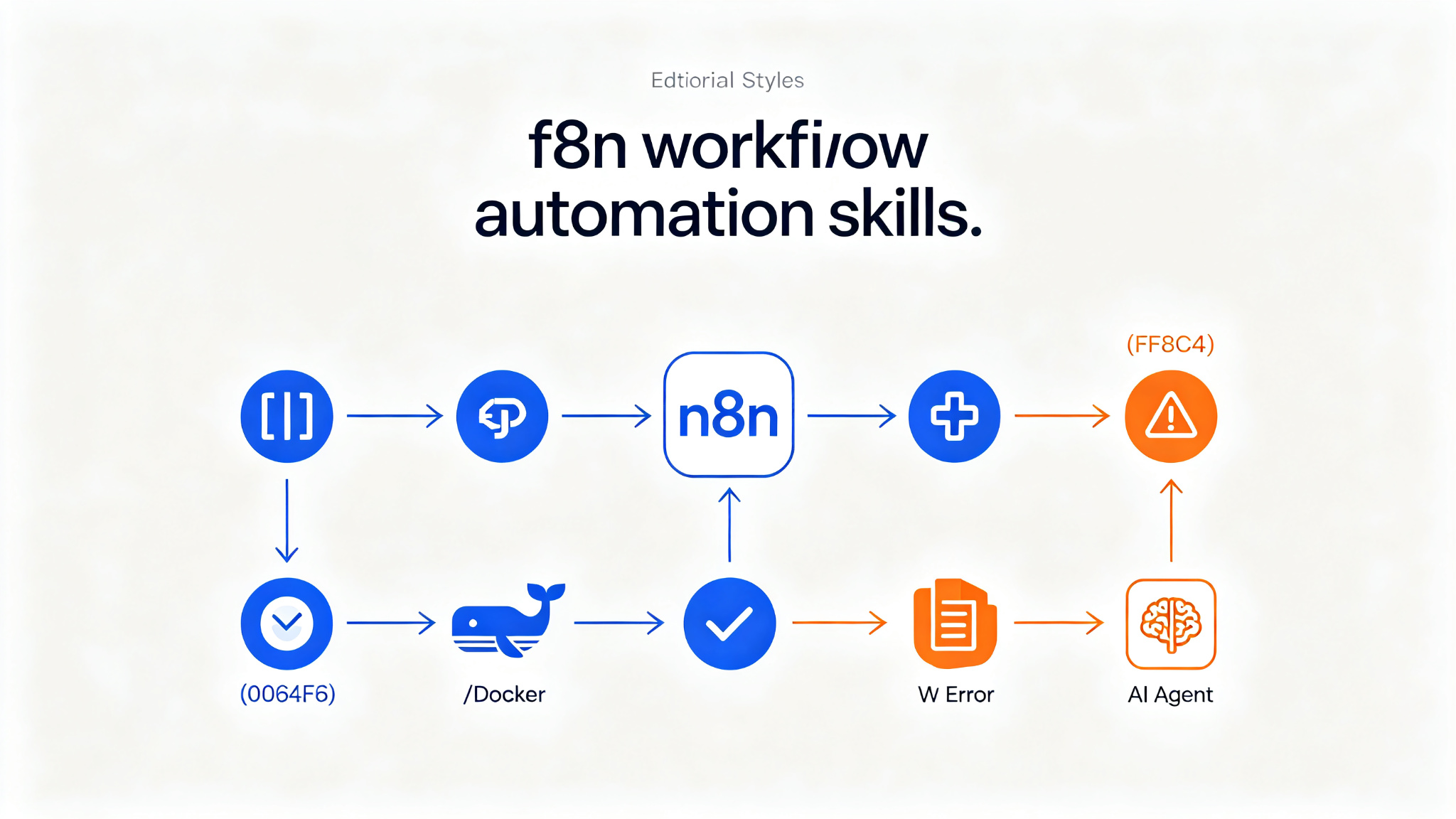
A collection of 14 complementary Claude Code skills plus an always-on router skill and hooks enforcement layer. Teaches AI assistants how to build production-ready n8n workflows using the n8n-mcp MCP server, and how to deploy self-hosted n8n. Covers expression syntax, MCP tools, workflow patterns, validation, node configuration, JavaScript/Python code, error handling, binary data, sub-workflows, AI agents, multi-instance management, and self-hosting. Supports 525+ n8n nodes, references 2,653+ workflow templates. Install via `/plugin install czlonkowski/n8n-skills`.