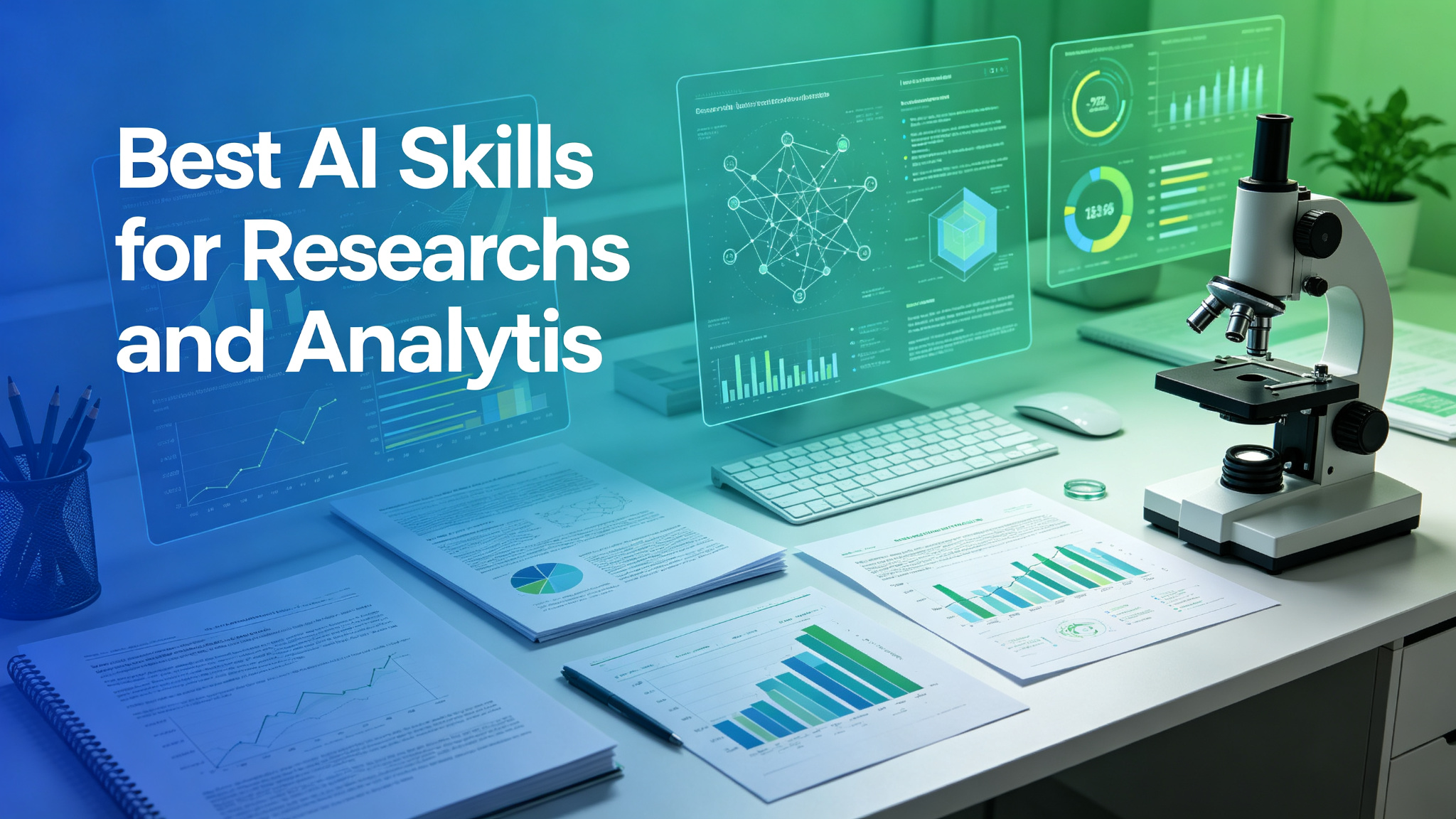
AI skills are transforming how researcher and analysts work, enabling them to automate repetitive tasks, generate creative ideas, and produce higher-quality work in less time. Whether you're a seasoned researcher and analyst or just starting out, the right AI skills can dramatically boost your productivity and creativity. This guide explores the most valuable AI skills for researcher and analysts, how to use them effectively, and practical tips for integrating AI into your workflow.
Why researcher and analysts Need AI Skills
The researcher and analyst landscape is changing rapidly. AI is no longer a niche tool — it's becoming an essential part of every researcher and analyst's toolkit. Here's why developing AI skills is crucial:
- **Productivity**: AI can handle repetitive tasks, freeing you to focus on creative and strategic work
- **Quality**: AI tools can help you catch errors, generate ideas, and improve the quality of your output
- **Speed**: AI can generate drafts, outlines, and concepts in seconds that would take hours manually
- **Competitive advantage**: researcher and analysts who master AI will outperform those who don't
- **New possibilities**: AI enables creative approaches and outputs that weren't possible before
Top AI Skills for researcher and analysts
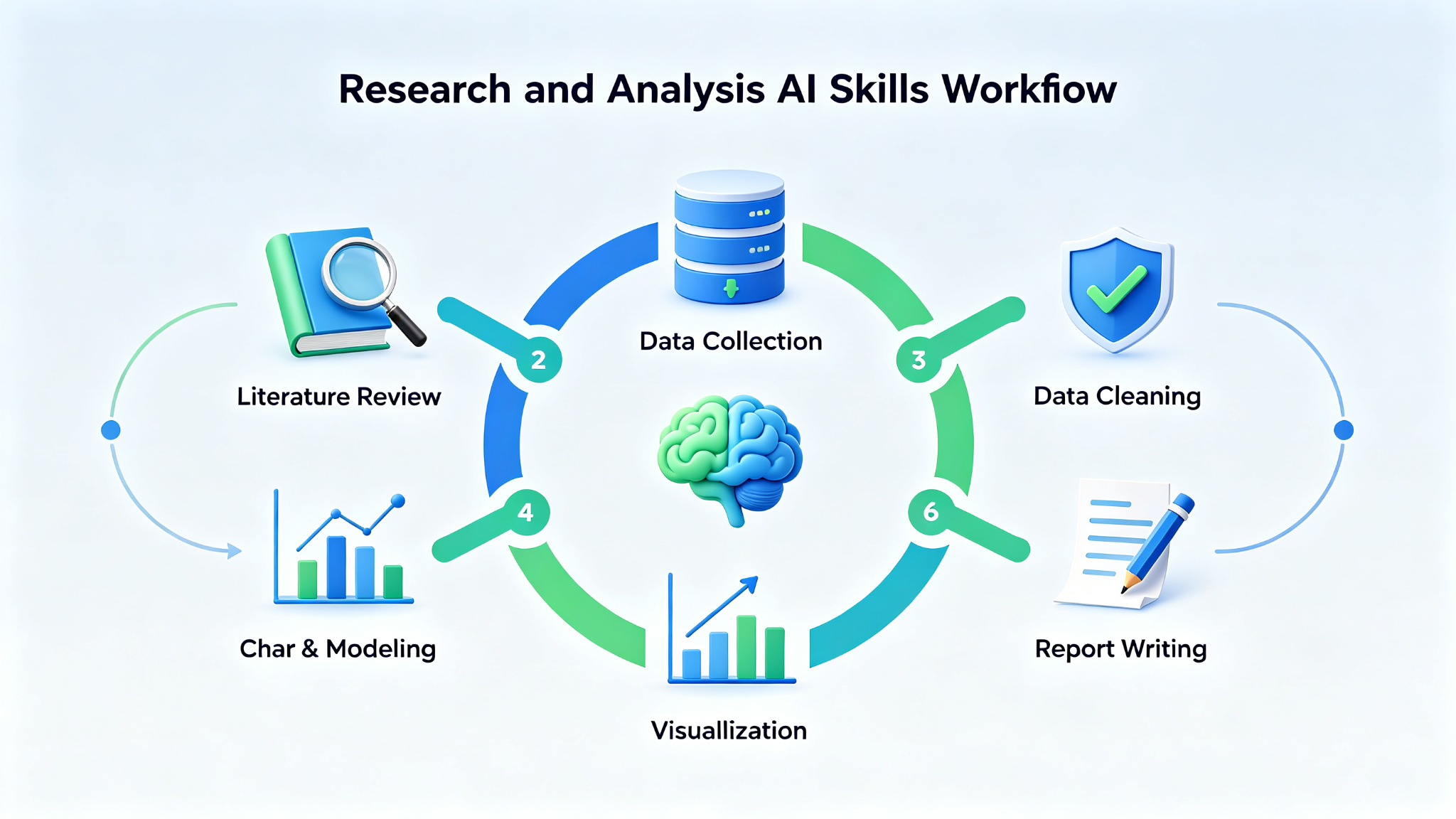
1. AI Literature Review and Research
AI can dramatically accelerate literature review and research. From finding relevant papers to summarizing findings and identifying research gaps, AI research tools can save weeks of manual work.
- Find and filter relevant papers based on research questions
- Summarize papers and extract key findings
- Identify research gaps and opportunities
- Generate citation networks and literature maps
2. AI Data Analysis and Modeling
AI can help you analyze data more effectively, from exploratory data analysis to advanced modeling. AI analysis tools can identify patterns, suggest analyses, and help you derive insights from your data.
Pro tip: When using AI for data analysis, always provide context about your data, research question, and what you've already tried. The more context you give, the better the AI can suggest appropriate analyses and interpret results correctly.
3. AI Data Visualization
AI can help you create better data visualizations, from suggesting chart types to generating visualization code. AI visualization tools can help you communicate your findings more effectively.
- Get suggestions for the best chart type for your data
- Generate visualization code (Python, R, D3.js)
- Create interactive dashboards and reports
- Get feedback on visualization clarity and effectiveness
4. AI Report Writing and Communication
AI can help you write better research reports and communicate your findings more effectively. From generating report outlines to writing executive summaries, AI writing tools can improve the quality and clarity of your research communication.
- Generate report outlines and structures
- Write executive summaries and abstracts
- Translate technical findings for non-technical audiences
- Generate presentation slides from research findings
5. AI Quality Control and Reproducibility
AI can help you ensure the quality and reproducibility of your research. From checking for errors to documenting methodologies, AI can help you produce more rigorous and reliable research.
- Check for statistical errors and methodological issues
- Generate reproducible research documentation
- Identify potential biases and confounding factors
- Suggest additional analyses for robustness
How to Build Your AI Skill Set
Building AI skills as a researcher and analyst is a journey, not a destination. Here's a practical approach to developing your AI capabilities:
- Start with one tool and master it before moving to the next
- Practice daily — even 15 minutes a day builds competence quickly
- Build a library of your best prompts and workflows for reuse
- Join communities of other professionals using AI to learn from their experiences
- Experiment with new tools and approaches — the AI landscape evolves rapidly
- Document your workflows and share your knowledge with others
Pro Tips for Success
- Use AI to accelerate research, but always verify findings and sources
- Never rely solely on AI for statistical analysis — understand the methods
- Provide detailed context when asking AI to analyze data
- Use AI for literature review, but read key papers in full
- Always cite and verify AI-generated references and citations
- Document your AI-assisted research methods for reproducibility
- Use AI to communicate findings, but ensure accuracy and clarity
Final Thoughts
AI skills are transforming research and analysis, enabling researchers and analysts to work faster, uncover deeper insights, and communicate findings more effectively. By mastering AI literature review, data analysis, visualization, report writing, and quality control, you can dramatically improve your research productivity and impact. Remember that AI is a tool to enhance your research skills, not replace them. The best researchers use AI to handle repetitive tasks and accelerate discovery while focusing their energy on critical thinking, methodological rigor, and meaningful interpretation of results. Always verify AI-generated findings, understand the methods behind AI analyses, and maintain the highest standards of research integrity. Start building your AI research skill set today and accelerate your impact.